Learning Beyond the Classroom
La Verne-area families share how homeschooling gives them flexibility to shape education around their children’s needs, interests and lives.
A typical school day begins with a bell and ends with students leaving to see their family. Some students begin their school day staying with family.
Sharon Chung, who homeschools her children, begins Mondays by taking her son to horseback riding lessons. Her daughter attends art classes Tuesday mornings and karate four evenings a week.
Schoolwork is often completed between activities with occasional adjustments when the family spends the day at Disneyland or Knott’s Berry Farm, and the work is completed another day, Chung said.
For Chung and other La Verne families, homeschooling offers the flexibility to build education around their children’s individual needs, interests and family schedules. While families have different reasons for choosing homeschooling, many say the approach gives them more control over how and when their children learn, along with more opportunities for family time and activities outside a traditional classroom. But that flexibility also comes with its own challenges: extra planning, time, structure, and support.
For Andria Scott, the decision to homeschool came from wanting to support her children’s different learning styles.
“The traditional public school doesn’t allow for [different learning styles],” Andria said.
She said homeschooling allowed her to tailor her children’s education to their needs, interests and learning styles. Her youngest child, Zoe, left public school in third grade. Now preparing for her senior year, Zoe has experienced both traditional school and homeschooling.
She said one of the biggest misconceptions about homeschooling is that students spend their days inside the house.
“I think a lot of times people think of homeschool as, you are spending the whole day inside your house, but in reality, I feel like I am hardly home,” Zoe said.
She participates in sports and activities throughout the city and said homeschoolers also have opportunities for events such as prom and homecoming.
Zoe said homeschooling has also given her more control over how she spends her time, she can finish schoolwork around midday, leaving time to read, craft, visit horses or work a job. She has also been able to work on college units ahead of time.
For Katie Perez, a homeschooling parent who previously taught in a traditional school system, the decision came after years of working in education.
Growing up, Perez said she did not know homeschooling was an option and initially held the perception that homeschooled children were “weird and rare.”
That changed when she was in college and began nannying for her professor’s homeschooled children; she said they were some of the most well-rounded children she had known.
After having her first child, she decided traditional preschool did not feel like the best fit for him or align with her family’s values.
Her family began experimenting with homeschooling when her oldest was three. Her oldest is now entering kindergarten, another child is in preschool and she has a baby on the way.
Because her children are young, formal academics typically take about 30 minutes a day; much of their learning continues through play, nature and everyday activities.
“We are frequently using the world as our school,” Perez said.
She appreciates being able to tailor her children’s education to their individual needs, including focusing on life skills and morals while they are young.
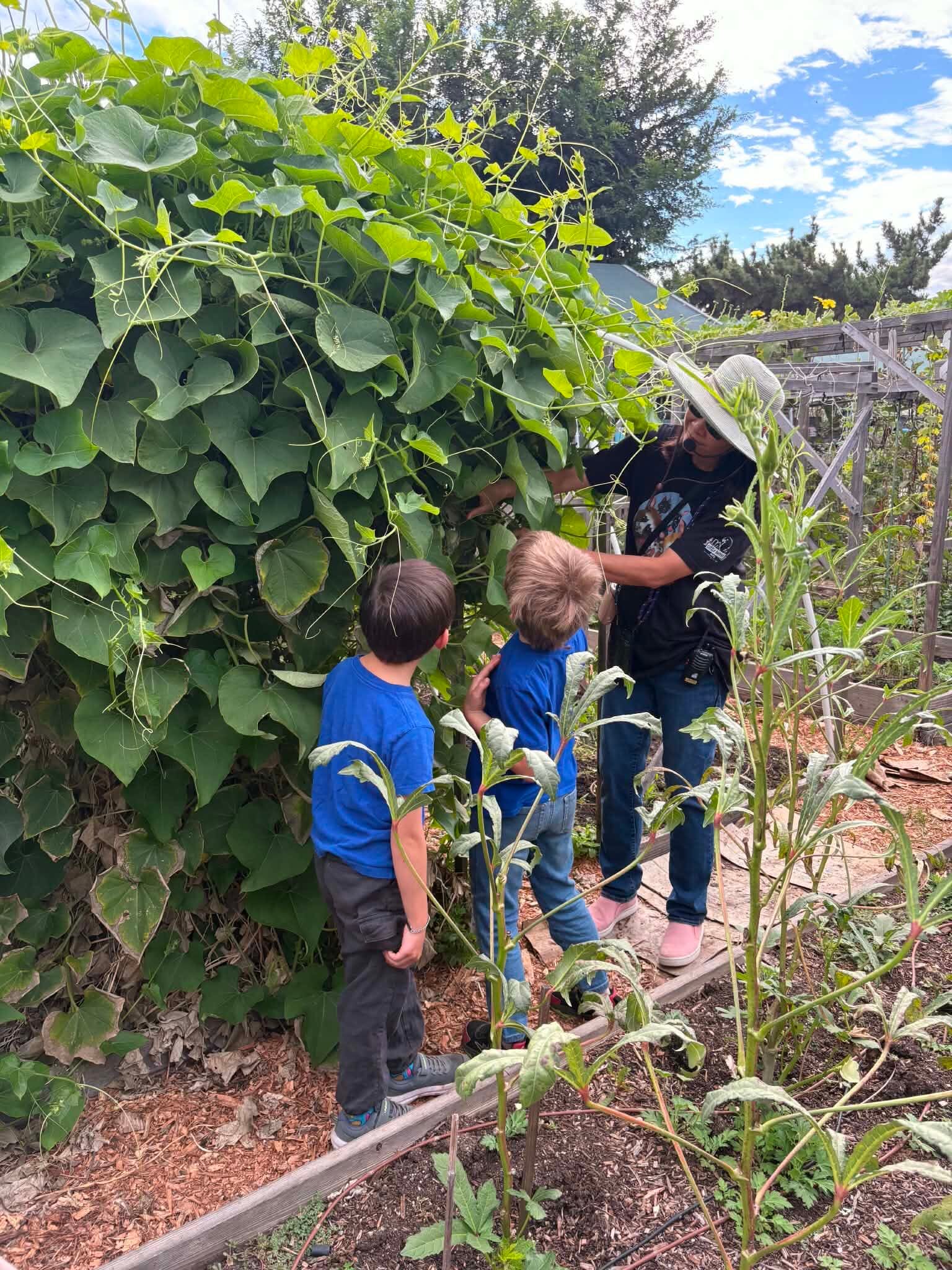
Another benefit, she said, is the amount of time her children spend outdoors playing and being active.
Chung said that if she were working and her children attended school, the family would leave home around 6:30 a.m. and not return until 6 p.m., leaving little time for dinner, baths, homework and family time.
She wanted an affordable Christian education for her children while having more time with them.
Homeschooling has allowed her children to work at their own pace rather than waiting for other students to understand a lesson or falling behind when they need additional time, she said.
Andria said socialization is another area where misconceptions about homeschooling persist.
“When it comes to the socialization aspect, it is such a misnomer; I feel like many people don’t really understand it,” Andria said.
Zoe said she has socialized through in-person classes and co-ops, where students of different ages can interact and participate in field trips.
Chung added how families have numerous options for supplementing their children’s education through co-ops and other homeschool groups.
She teaches American Sign Language at EIE Academy in Monrovia, where her students range from children to adults.
Co-ops and other homeschool groups can provide classes in subjects parents may not feel comfortable teaching themselves, she said, while giving students opportunities to learn alongside children of different ages.
Chung said homeschool children tend to be more social than traditional school children,
“That’s funny [homeschool children are said to not be social], homeschooled children are typically better socialized than kids in typical school,” she said. She explained that in traditional classes 20 to 30 students are the same age to socialize with. When you graduate, you will need to socialize with people of all ages, not just your age group, and it is limited to “sit down and listen and learn, only talk if you have a question.”
Suzy Gonzalez said the biggest misconception is that homeschooling children are not social.
Many participate in enrichment centers, co-ops, classes, sports, clubs and community groups. Their social circles may look different than those of traditional students, but they may also interact with several different groups.
“The homeschool students I know are very social,” she said. “Most belong to enrichment centers, co-ops, classes, sports where they’re regularly interacting with other kids.”
Gonzalez is a homeschool teacher and executive director with Healthy Footprints Adventure Community, an outdoor learning community that teaches through real world experience.
Gonzalez has taught homeschool students since 2022. She said she saw a need in the community for more opportunities for young people to connect with the outdoors, a sense of place with the outdoors and learning through real experiences.
Her programs include field science, ecology and wildlife, marine science, outdoor and survival skills, hiking, conservation, nature photography, leadership and community science.
A typical day might involve hiking into a canyon to study wildlife and habitat, snorkeling to observe marine life, conducting a community science survey, learning outdoor navigation or participating in a restoration project.
Students also meet scientists, naturalists, conservationists and other outdoor professionals through leadership programs, giving them a look at potential careers.
Gonzalez said one thing she has noticed is many homeschool students value experience first
Instead of only reading about a plant, animal or ecosystem, students can observe it firsthand, ask questions and track changes over time before returning to academic work.
For students who have difficulty sitting at a desk for long periods, she said that approach can be particularly powerful.
“They’re moving their bodies, using their senses and interacting with what they’re learning,” Gonzalez said. “I’ve watched students become completely engaged in a subject because they found an animal track, spotted wildlife, noticed a change in a creek or discovered something.
Homeschooling is not without challenges. Perez said one of the most difficult parts has been finding quiet time for herself while caring for and teaching her children. She works part-time as a doula and relies on help from grandparents, friends and a babysitter to balance homeschooling with her work.
She said the support she has received from other homeschool families has been one of the biggest surprises.
Becky Cisneros homeschooled her children decades ago after her oldest daughter struggled attending school in Pomona.
She eventually homeschooled both daughters for four years, the oldest from second through fifth grade and her youngest from first through fourth grade. Both later graduated from Bonita High School and went on to successful careers.
Cisneros said homeschooling required structure and consistency.
“I expected them to be at the table at 8 a.m.; you can stay in your pajamas, I don’t care if you’re dressed, but at 8 o’clock you need to be at the table ready to go,” she said.
She said homeschooling families have even more opportunities to connect and participate in activities than they did when she was homeschooling her daughters.
Looking back, Cisneros said structure was an important part of making homeschooling successful.
“In order for it to be successful, parents need to maintain that level of structure and stability,” she said. “I think that if you are homeschooling and not designating that scheduling and timing, that it would be, in my opinion, a disservice to the child.”
Andria appreciates the time she got back with her daughters from homeschooling.
“I am so grateful as a parent I got to have that time with them,” she said. “I look back at the sacrifices we have made, and I would do it again.”
Families considering homeschooling, Perez said
“You can do it! You can try it and try something else next year if it isn’t working for your family.”