Negotiations Stall and La Verne’s Channel 3 Briefly Goes Dark
City, University negotiate future of La Verne’s public access channel
Residents who rely on La Verne’s public access Channel 3 temporarily lost access this month as negotiations over the future of La Verne Television, known as LVTV, stalled between the City of La Verne and the University of La Verne.
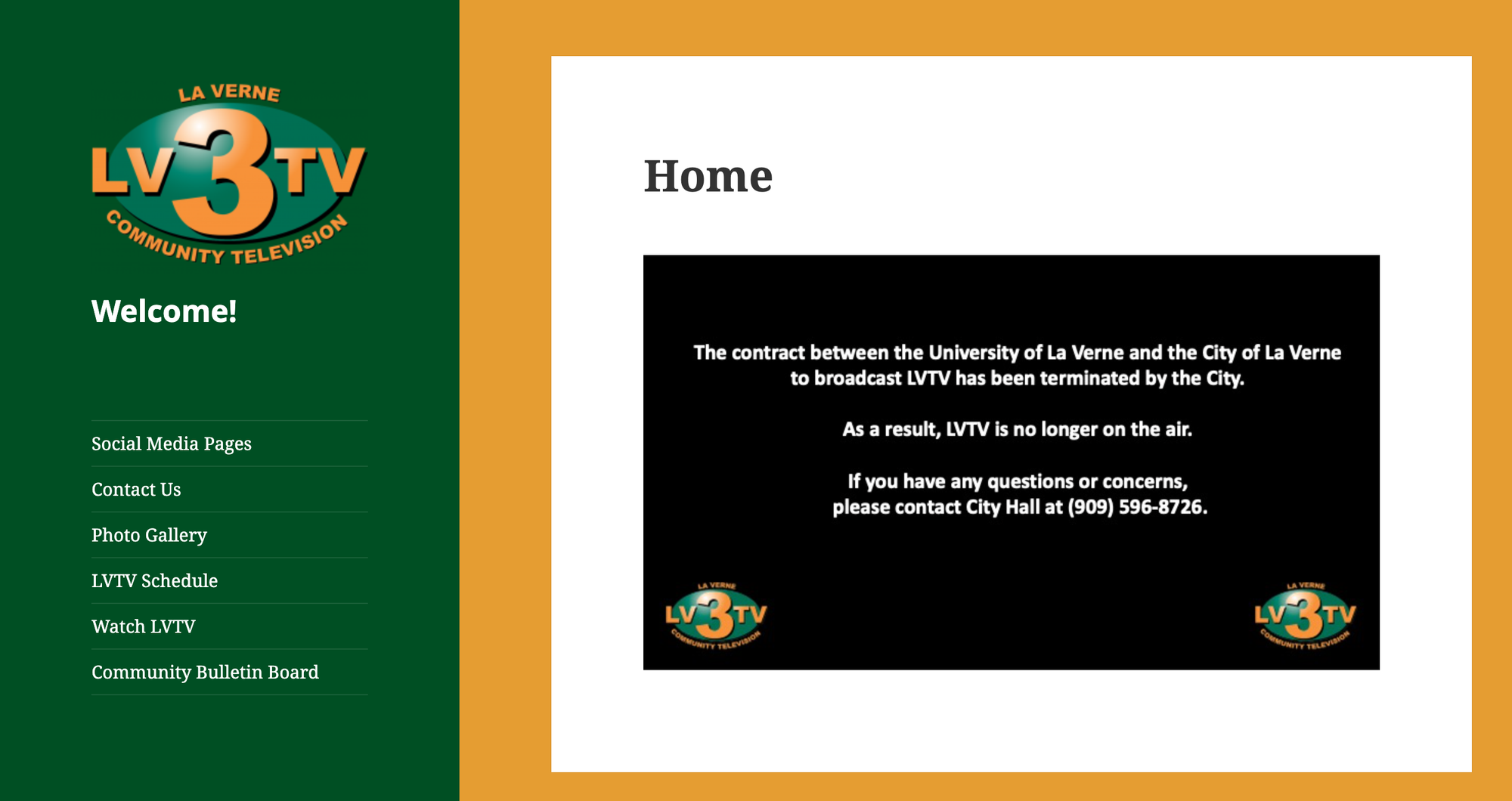
La Verne Daily News has been unable to confirm exactly when the channel went offline. As of Friday night, Channel 3 was broadcasting what appeared to be a previously recorded Roynon Elementary School holiday concert. LVTV programming has remained accessible online through YouTube.
The University of La Verne said in a statement that it recognizes the community service provided by LVTV and the experiential learning opportunities it offers students, and that “The University is evaluating options for continued support of the station.”
According to an email from City Manager Ken Domer, the City issued a 90-day termination notice to the university on June 4, 2025, with the intent of negotiating a new agreement. Domer said the termination was driven by budget constraints and declining Public, Education and Government (PEG) revenue and was not related to performance concerns.
Domer said the City has been evaluating its communication methods, technology and the long-term viability of PEG funding for about three years.
Sherry Best, president of the La Verne Historical Society, said the potential loss of LVTV raises concerns about preserving local history.
“If LVTV goes offline, many records of preservation will be lost or severely curtailed,” Best said. “We are so fortunate to have the technology to create permanent products that will inform future generations. It is a shame to eliminate any opportunity to create and preserve history.”
The partnership between the City and the University to operate LVTV dates back to 1994 and has remained largely unchanged, Domer said. The agreement was designed to be funded entirely through PEG fees collected from cable television providers. That revenue source has steadily declined as residents shift from cable television to streaming services.
State legislation passed in 2006 capped PEG funding at 1% of cable provider revenues, contributing to an estimated annual decline of about 8% in PEG funds for the City, according to Domer.
Under the most recent agreement, approved by the City Council in 2019, the City paid the University $64,000 per year to operate LVTV. Domer said current PEG revenue is now under $50,000 annually. The city also pays about $22,000 per year to Swagit, a third-party vendor now part of Granicus, to broadcast City Council meetings, requiring the City to subsidize LVTV operations with General Fund dollars.
Domer said the City can no longer afford to use General Fund money to support LVTV and wants to redirect limited PEG funding toward digital platforms.
“We believe we ought to focus the funding better on current technology, such as our website, and for informative programs such as what we recently did with our water department,” Domer said. He added that the City would like to begin broadcasting commission and committee meetings that are currently not recorded or aired.
Best said LVTV provides production services that community organizations cannot easily replicate.
“LVTV has professional editing capability, using presentation narrative combined with archival images and other visuals to create polished products that tell a more dimensional story,” she said.
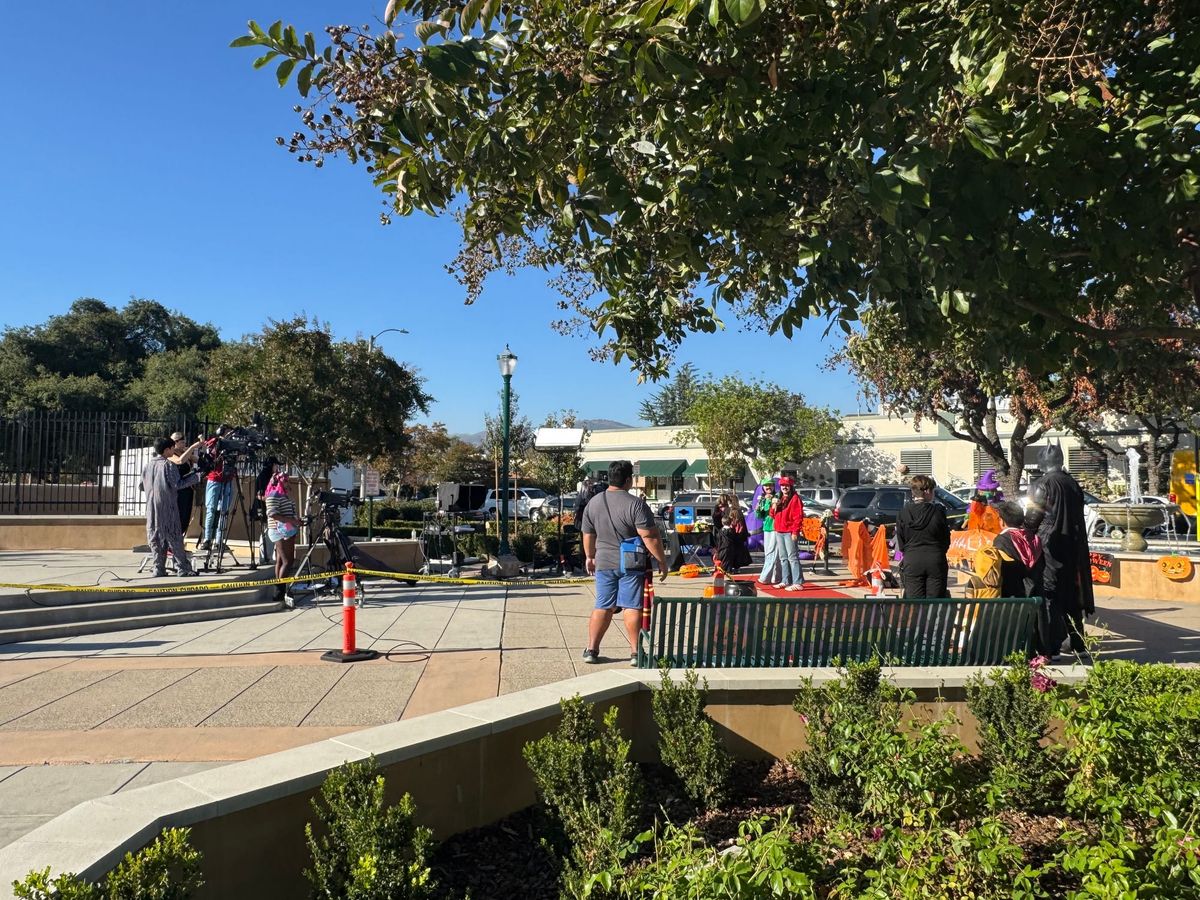
Best pointed to the recent Holiday Stroll event, during which community members were recognized as part of a newly created La Verne Walk of Honor. She said the event was not formally recorded on video and that similar moments may be lost without LVTV.
She added that the La Verne Historical Society does not have a permanent location to display artifacts or host exhibits and that it relies heavily on video documentation.
“The absence of LVTV shifts the onus of video preservation to the society, which has no funding to do so,” Best said.
Domer said he wants to work with the La Verne Historical Society to ensure its information remains publicly available and is enhanced.
In a revised agreement sent to the University on Sept. 30, 2025, the City proposed reducing LVTV funding to approximately $20,000 for the first year, with the possibility of increasing it to about $32,000 if LVTV assumed responsibility for broadcasting city council meetings. Domer said the proposal was rejected by the University.
Domer said the City was unaware of a Jan. 1 deadline that resulted in LVTV being taken off the air. He said City-owned equipment used to operate the channel is currently housed at the University, and the City is exploring options to retrieve it if no agreement is reached.
University officials did not explain why the City’s proposal was rejected or whether the station could continue operating under reduced funding.
An end-of-year report shows LVTV produced or aired hundreds of programs in 2025, including City events, school performances, lectures, sports and historical programming. Domer said City-related content makes up a relatively small portion of that programming, and the City does not have data on how many residents watch LVTV via cable.
In La Verne, broadband access is high, with about 95% of households reporting a subscription, according to 2019–2023 U.S. Census data. However, if the channel were to permanently go offline, the loss could disproportionately affect residents who rely on cable television as their primary source of local information, including seniors and residents who do not regularly use streaming platforms or social media.
Domer said the City hopes to restore and improve the service once an agreement is reached.
“We do have a good relationship with them [the University], and I believe that we can find agreement,” Domer said. “LVTV3 won’t go away; it will be better and more impactful, and this issue is just a hiccup.”
See an error? Please email staci@lavernedaily.org. See our Corrections policy
Local Events Calendar