What’s on La Verne’s Oct. 19 City Council Agenda
Paramedic pay, a regional 911 dispatch partnership, a fee waiver for Homecoming weekend and a safety plan that could unlock state disaster help.
Correction: 5:10 p.m. Oct. 19, emailed comments deadline updated to the day of the council meeting, Oct. 19.
My goodness, it has been a full few weeks at City Hall.
Since the Sept. 22 battery fire at the Metropolitan Water District’s Weymouth facility, the council has held a special meeting (Sept. 29) and a regular meeting (Oct. 5). This Monday, Oct. 19, the agenda looks a little quieter. But here’s the thing: a couple of these items touch the stuff that matters most when something goes wrong, namely who answers your 911 call, who responds when you need an ambulance, and how La Verne prepares for (and pays for) a disaster.
La Verne City Council meets at 6:30 p.m. Monday, Oct. 19
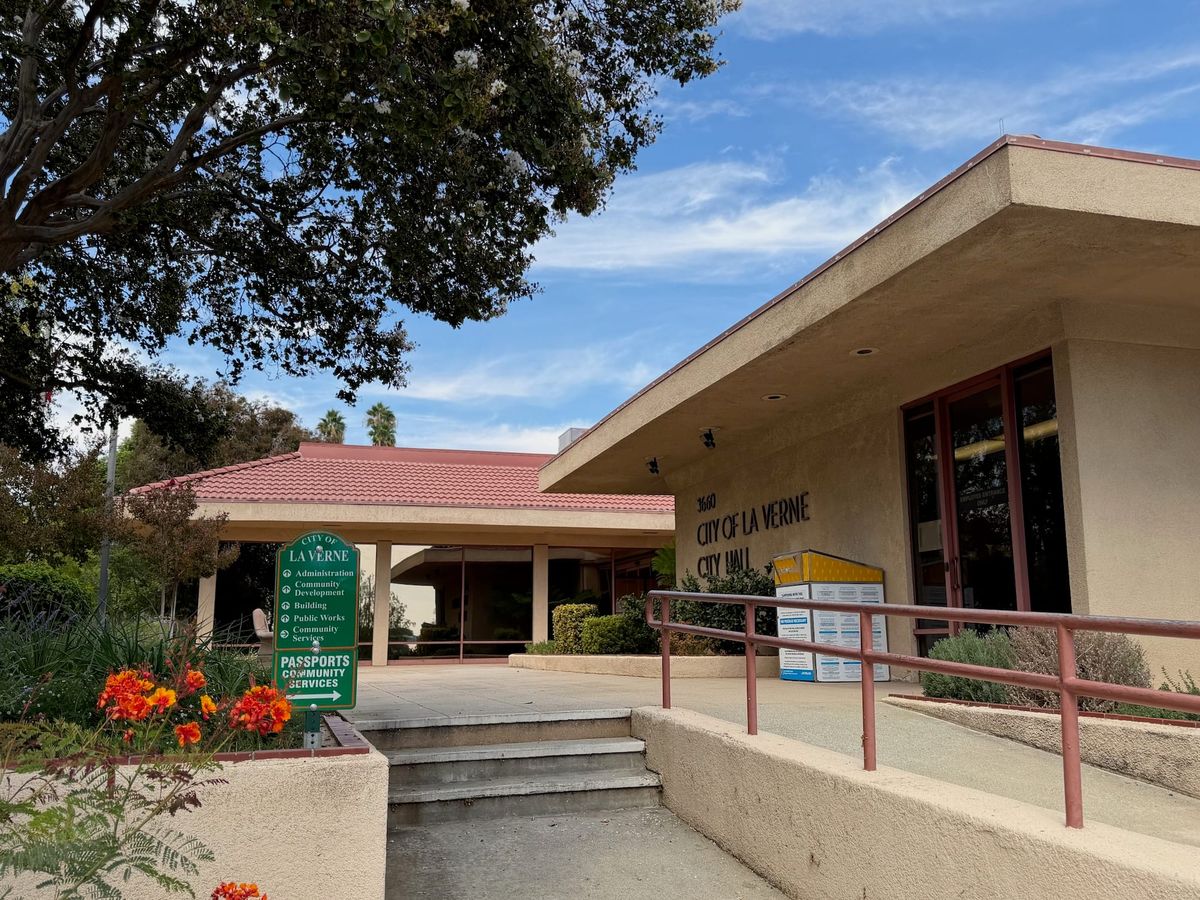
Where: City Hall Council Chambers, 3660 D St., La Verne
How to attend: In person, via Zoom at LaVerneCA.gov/zoom, or by phone by calling 1-669-900-6833 and enter ID 819 6020 8541 when prompted.
🔗 Oct. 19 City Council Meeting Agenda Packet
🗣️ Public Comment Opportunities
Want your voice on the record before the gavel drops? You can email the City Clerk's Office at cityclerk@LaVerneCA.gov up to noon Oct. 19—these comments become part of the public record and are shared with the council in advance.
Prefer to speak live? Show up in person and fill out a comment card, or raise your hand during the item on Zoom. Every speaker gets three minutes.
Visit LaVerneCA.gov/zoom or call 1-669-900-6833, enter ID: 819 6020
8541; raise your hand to request to comment.
Public comment is allowed:
- During the Public Hearing
- On Discussion Calendar items
- On Consent Calendar items if pulled for separate discussion
- During general public comment for items not on the agenda
Once the council has taken up an item, no more public comment is accepted on it, so speak up before the discussion starts. A general Public Comments period near the end covers topics not on the agenda, though the council generally can’t discuss those on the spot. To request an accommodation, call the City Clerk’s Office at (909) 596-8726 at least 48 hours ahead.
💡 Civic Tip: What’s a “closed session”?
Before the public meeting, the council will meet behind closed doors for a “conference with labor negotiators.” State law allows this so the City can talk strategy about employee contracts without tipping its hand at the bargaining table. The negotiators are the city manager, assistant city manager and city attorney. The employee groups involved are the La Verne General Unit, the La Verne Firefighters Association, the La Verne Fire Middle Management Association and the Police Middle Management Association.
The council doesn’t vote on contracts in closed session, and it must report any decisions publicly afterward.
Discussion Calendar
🔥 Hot Topic
Side letter with the La Verne Firefighters Association on paramedic pay. The City and the firefighters’ union have agreed to a “side letter,” a short add-on to their existing contract (called a Memorandum of Understanding, or MOU), that sets how firefighters will be paid when they finish paramedic training. It covers the gap while the two sides negotiate a new contract. The current MOU was approved in December 2022.
A firefighter that the City selects and sends to paramedic training would, once certified, move into the Firefighter Paramedic classification at the same numbered pay step. Paramedic pay is 15% of the top firefighter step higher, which is $17,232 a year based on the July 2026 salary schedule. For example, a Step 3 firefighter earning $104,198 a year would move to Paramedic Step 3 at $121,429. The fire chief decides who goes to training, how many and when, and the City expects to send about two firefighters in early 2027. The side letter doesn’t commit either side to a particular pay model in the new contract and doesn’t set a precedent.
Why it matters: Paramedic-trained firefighters are a big part of how a fire department responds to medical emergencies, so how the City pays them affects whether it can staff those roles. It’s also a taxpayer question: each firefighter who earns the certification comes with a raise of about $17,000 a year at the same step.
There’s a backstory in the fiscal analysis. Under the 2022 MOU, two firefighters promoted to paramedic in April 2025 were placed at a step 5% higher than their previous pay. A third, promoted in February 2026, was handled the same way. The City then received a grievance, and the staff report says the two sides disagree about how to read the MOU. To avoid “the cost and uncertainty of further proceedings,” they settled without either side conceding its position. The settlement for the three employees totals about $37,862 through the Oct. 3 pay period.
Presentations
University of La Verne update. ULV President Risa Dickson will give the council an update on the 2026-27 academic year.
YWCA Volunteer of the Year. The council will recognize Maria Con, the YWCA’s Volunteer of the Year for La Verne, for her service with the City’s Senior Lunch Program.
Red Ribbon Week. The council will proclaim Oct. 23-31 as Red Ribbon Week, encouraging residents, schools and businesses to take part in activities that promote drug-free living for young people.
Consent Calendar
These items are considered routine and are approved together in one vote unless a council member or a member of the public asks to pull one for separate discussion.
Meeting minutes. The council will approve the minutes of the Sept. 29 special meeting (the battery fire emergency) and the Oct. 5 closed session and regular meeting.
Bills. The council will approve $3,121,123.58 in audited payments dated Sept. 28 through Oct. 11. The largest items listed in the summary are $870,161.49 to Three Valleys Municipal Water District for August water and $134,970.85 for the Department of Justice’s LA CLEAR (a regional law enforcement system).
Business license fee waiver for ULV Homecoming. The University of La Verne wants the City to waive business license fees for vendors at its Homecoming and Family Weekend, Oct. 23-24. Staff estimates the waived fees at up to $1,750. The event permit also lists street closures and traffic control, so if you live near campus, expect some changes in traffic that weekend. Council Member Wendy Lau will recuse herself because she serves on the ULV Board of Trustees.
Regional dispatch agreement with Covina, Irwindale and Azusa. La Verne, Covina, Irwindale, and Azusa would agree to lend each other police dispatchers when one city is short-staffed. Help is voluntary and depends on who’s available. A city asking for help must give at least 24 hours’ notice, and the lending city’s police chief must approve it in writing. The billing rate is $62.30 an hour per dispatcher, with a cap of $30,000 per city per fiscal year. The agreement would run through Oct. 19, 2028, and any city can leave with 10 days’ written notice.
Why it matters: Police dispatchers are the voices on the other end of your 911 call, and when one calls in sick, or a shift goes unfilled, someone has to cover. This gives the department a backup plan without forcing any city to give up control of its own staffing: the dispatchers stay employees of the city that sends them. The staff report also calls it “an important first step” toward possibly building a shared regional dispatch center someday, supported by a grant secured through Congressman Gil Cisneros. That’s a bigger conversation, and it’s not what’s being decided Monday.
2026 Legislative Session Report. City staff report back on the 17 state bills La Verne took a position on this year, out of roughly 1,800 considered that could affect local governments. The council is asked only to receive and file the report, with no vote on policy.
Why it matters: This is a scorecard on how Sacramento’s decisions landed in La Verne. Of the bills where the City submitted position letters, eight became law. The City supported AB 1546 (tougher penalties for repeat DUI offenders), AB 1786 (more flexibility for cities on public construction contracts), AB 1821 (more time for agencies to respond to public records requests) and SB 1370 (faster review of wildfire mitigation projects). It opposed AB 1738 (remote inspection requirements for certain residential construction), AB 1768 (an additional Los Angeles County sales tax, if voters approve), SB 1014 (more preliminary improvement information for housing developments) and SB 1117 (changes to development impact fees for accessory dwelling units), and those became law anyway. The governor vetoed AB 1383, a pension bill the City opposed, on Sept. 20.
🔗 Read the City’s position letters and 2026 Legislative Platform
Public Hearing
Safety Element amendment to incorporate the Local Hazard Mitigation Plan. On Oct. 5, the council adopted the City’s 2026 Local Hazard Mitigation Plan, a document that identifies natural hazards La Verne faces and lays out ways to reduce the long-term risk to life and property. It covers dam failure, drought, earthquake, extreme temperatures, extreme wind, flooding, landslides and wildfire. Now the council is asked to fold that plan into the Safety Element, the part of the city’s General Plan that addresses safety and emergency preparedness.
The reason is a 2006 state law, Assembly Bill 2140. Cities that incorporate their federally approved hazard plan into their General Plan may qualify for a larger state share of eligible disaster recovery costs, when the Legislature authorizes it. Staff say the amendment doesn’t change land use, zoning or building densities and doesn’t authorize any development, and that it’s exempt from environmental review under the California Environmental Quality Act (CEQA) for that reason. The Planning Commission recommended approval 4-0 on Sept. 9. If approved, the resolution takes effect on the 31st day after adoption.
This is a public hearing, so Monday is your chance to comment before the vote.
🔗 Read the draft Local Hazard Mitigation Plan
Why it matters: “May qualify for additional state assistance” isn’t a guarantee, and the staff report is careful about that wording. But when a disaster hits, who pays the bill matters to every resident’s taxes and city services. The report says this step has no direct cost to the General Fund. A note on scope: the plan covers natural hazards. The Sept. 22 battery fire was an industrial incident, so this document isn’t where that conversation happens.
Looking Ahead
Next council meeting: Monday, Nov. 2, with a closed or study session at 5:30 p.m. and the regular meeting at 6:30 p.m.
Election Day is Tuesday, Nov. 3 (polls open 7 a.m. to 8 p.m.).
Also on the calendar:
- Wednesday, Oct. 21: Senior Advisory Committee, 10-11:15 a.m. at the Community Center; Parks & Recreation Commission, 5:30 p.m. at City Hall.
- Friday, Oct. 23-Sunday, Oct. 25: University of La Verne Homecoming Weekend. More information
- Friday, Oct. 23: Dance for people with intellectual and developmental disabilities, 5-8 p.m. at the Community Center.
- Saturday, Oct. 24: La Verne Historical Society walking tour of Kuns Park Square, 11 a.m.-1 p.m., 1660 Bonita Ave.
- Wednesday, Oct. 28: Transportation & Infrastructure Commission, 4-5 p.m. at City Hall.
- Saturday, Oct. 31: Halloween trick-or-treat in Old Town La Verne, Mainiero Square, 1-4 p.m.
The news is free. Reporting it isn't. Help me raise $50,000 by Dec. 31 to give La Verne another year of independent local news.
Local Events Calendar