Inside La Verne's Proposed $101.6 Million Budget
Public safety remains the largest expense as the City weighs rising pension costs, budget pressures and the future of community programs.
Why it matters: The budget determines funding for nearly every City service, from public safety and infrastructure to parks and community programs.
What happens next: If approved by the City Council on June 15, it will take effect July 1 and guide City spending and priorities through fiscal year 2026-27.
At the June 1 budget discussion, council members acknowledged the City's financial challenges while emphasizing the importance of maintaining core services.
Council Member Wendy M. Lau urged modifications over eliminations, pointing to fewer concerts or combined events, and new partnerships with businesses and the Chamber. “Change will be uncomfortable,” she said, but necessary to keep programs sustainable.
Council Member Rick Crosby called for maintaining about a 30% reserve and “keeping community programs as much as possible."
While no one advocated eliminating the community programs, council members directed staff to explore efficiencies, sponsorships and alternative funding sources rather than cutting the events outright.
La Verne's proposed fiscal year 2026-27 budget projects revenues will grow by about $3.3 million while expenses are expected to increase by nearly $6.4 million. The widening gap, driven largely by rising personnel and pension costs, has led City officials to pursue spending reductions, operational efficiencies and new funding sources to maintain a balanced budget.
The City Council is scheduled to vote on June 15 to adopt the budget for the fiscal year beginning July 1.
How the City Closed the Gap
The proposed budget includes about $101.6 million in spending across all City funds, including about $49 million from the General Fund. Reserve levels are projected to remain at 30.1%.
The proposed General Fund budget totals $48.99 million, a decrease of about $957,500, or 1.9%, from the current fiscal year. However, the reduction is largely the result of a planned change that shifts solid waste billing responsibilities from the City to Waste Management beginning Sept. 1. Because the City will no longer collect and process those payments, expenditures in the Streets Division are projected to decline significantly.
To help eliminate the remaining budget shortfall, City staff shifted about $150,000 in transit-related public safety costs from the General Fund to Proposition C transportation funding.
According to the proposed budget agenda report (page 4), the change is intended to support increased transit-related public safety activity associated with the recently opened A Line station. The funding would establish a Transit Liaison Program and Transit Response Program focused on transit-related calls and coordination with Metro.
The City also incorporated a series of smaller cost-saving measures, including reductions in travel, training, supplies, contract services, and janitorial services at Veterans Hall.
While City leaders reviewed potential reductions to community events, the City Council directed staff to continue those programs while seeking efficiencies, sponsorships and greater cost recovery.
According to budget documents, the combined changes eliminated the remaining budget gap while preserving core City services and programs.
Where the Money Comes From
City revenue is projected to increase from $87.6 million in fiscal year 2025-26 to $91 million in fiscal year 2026-27, an increase of about 3.8%.
The City's revenue mix remains largely unchanged. Special Programs Fund revenues account for the largest share of revenue at about 24%, followed by property taxes at about 20% and the Water Fund at about 13%. Special programs are supported by federal, state and other outside funding sources. Because the funds are restricted, they can only be spent on the specific projects or services for which they were awarded. (See breakdown of Special Program Funds on page 33 of the proposed budget.)
While revenues continue to grow, they are not increasing fast enough to keep pace with rising expenditures, particularly personnel and pension costs.
Revenue Sources: FY 2025-26 vs. FY 2026-27
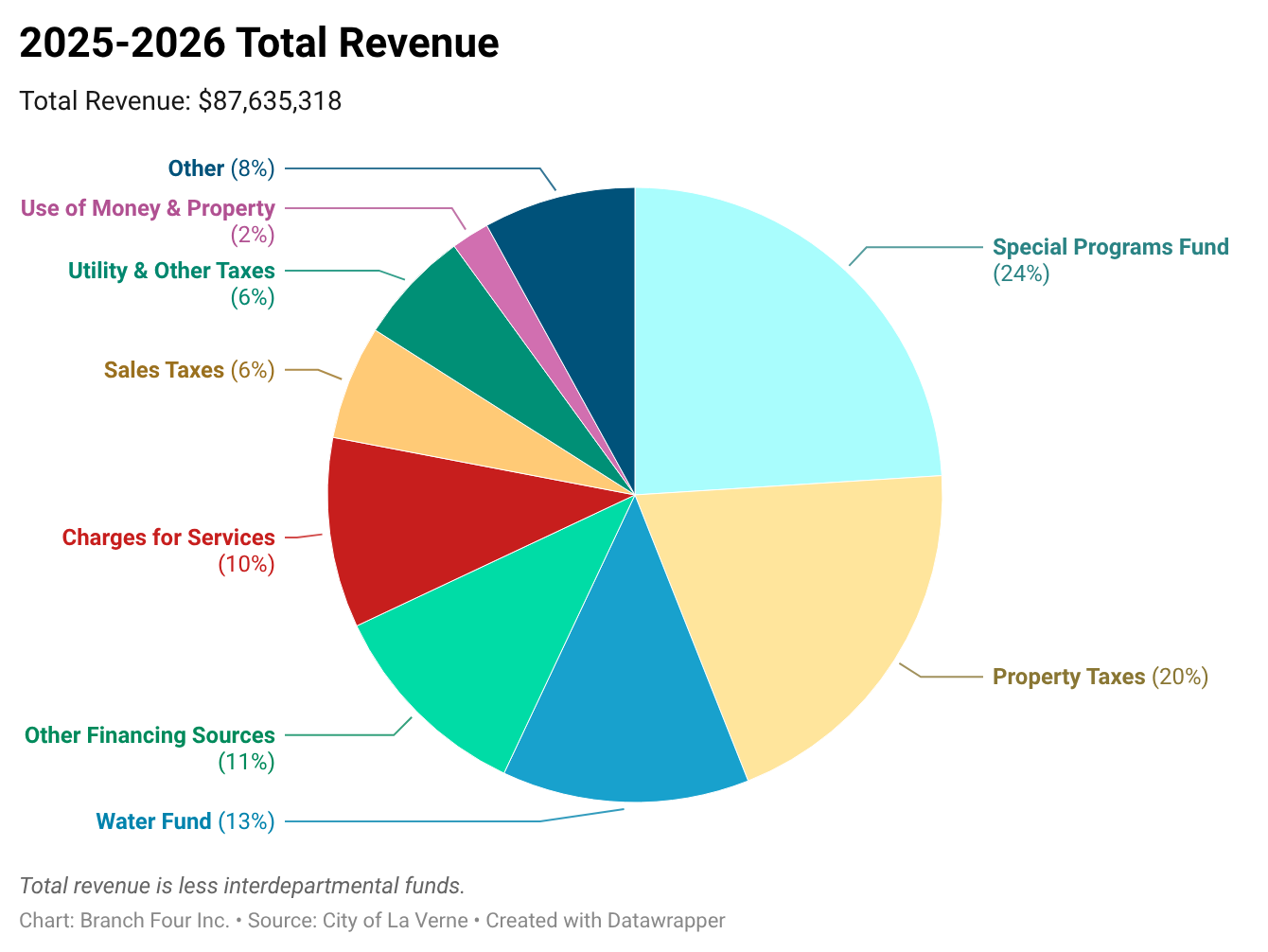
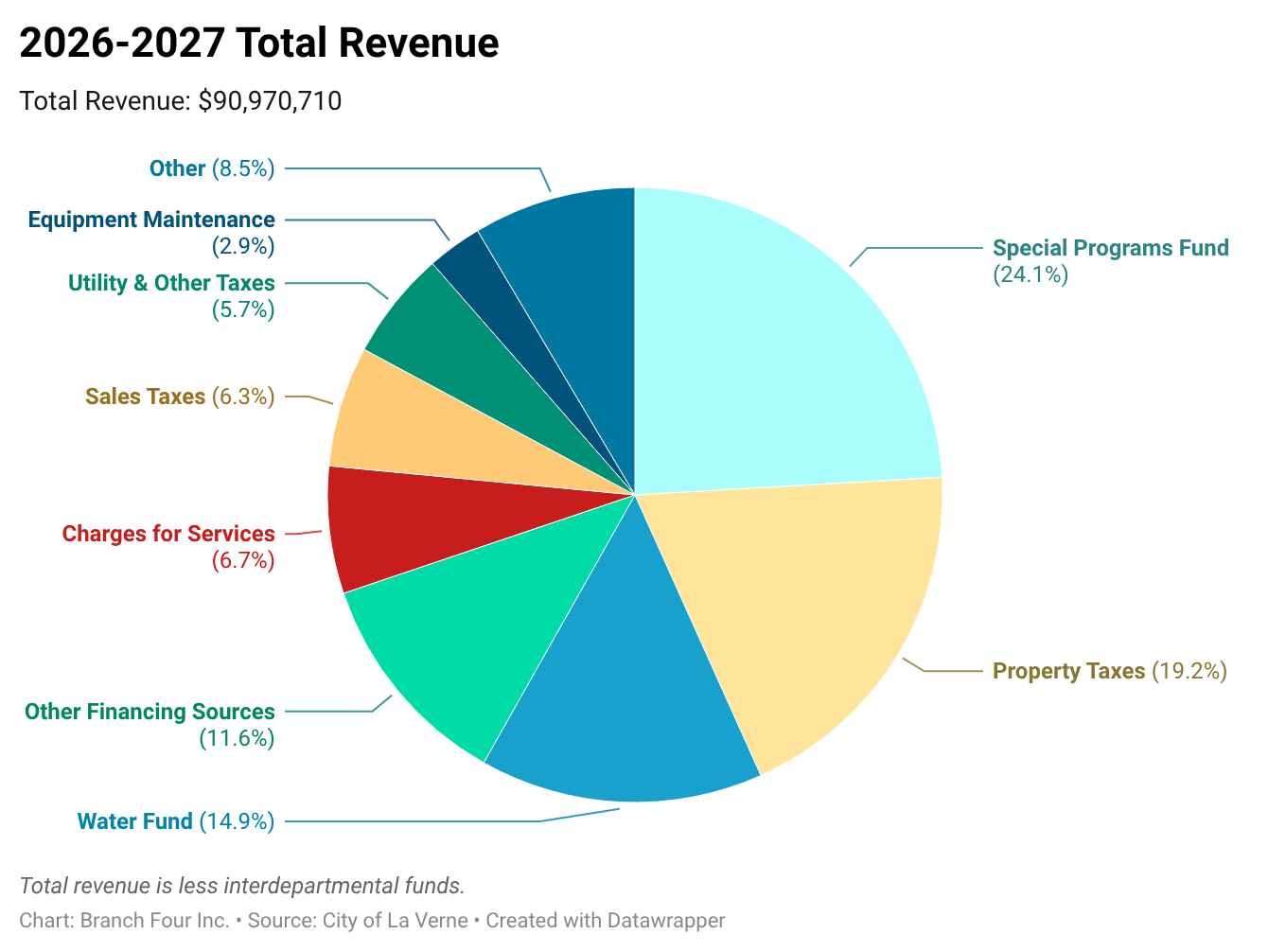
City revenue is projected to increase by about $3.3 million next year. The City's largest revenue category is the Special Programs Fund, which accounts for about 24% of projected revenues. Budget documents do not further break down the fund in the summary charts. Property taxes remain La Verne's second-largest revenue source, generating about 20% of all City revenue. The biggest shifts are a decrease in service-related revenue and an increase in Water Fund revenue, while the overall revenue mix remains largely unchanged. Thanks to our news partner Branch Four Inc. for data reporting and visualization support.
Where the Money Goes
Public safety remains the City's largest spending category. Police and Fire account for nearly 34% of all projected expenditures in fiscal year 2026-27.
The budget also reflects changes in several major spending categories. Capital improvement spending is projected to increase from 5.2% to 9.5% of total expenditures, while Street and Park Maintenance declines from 9.5% to 6.1%.
Overall City spending is expected to rise 7.1%, outpacing projected revenue growth of 3.8%.
Expenditure Categories: FY 2025-26 vs. FY 2026-27
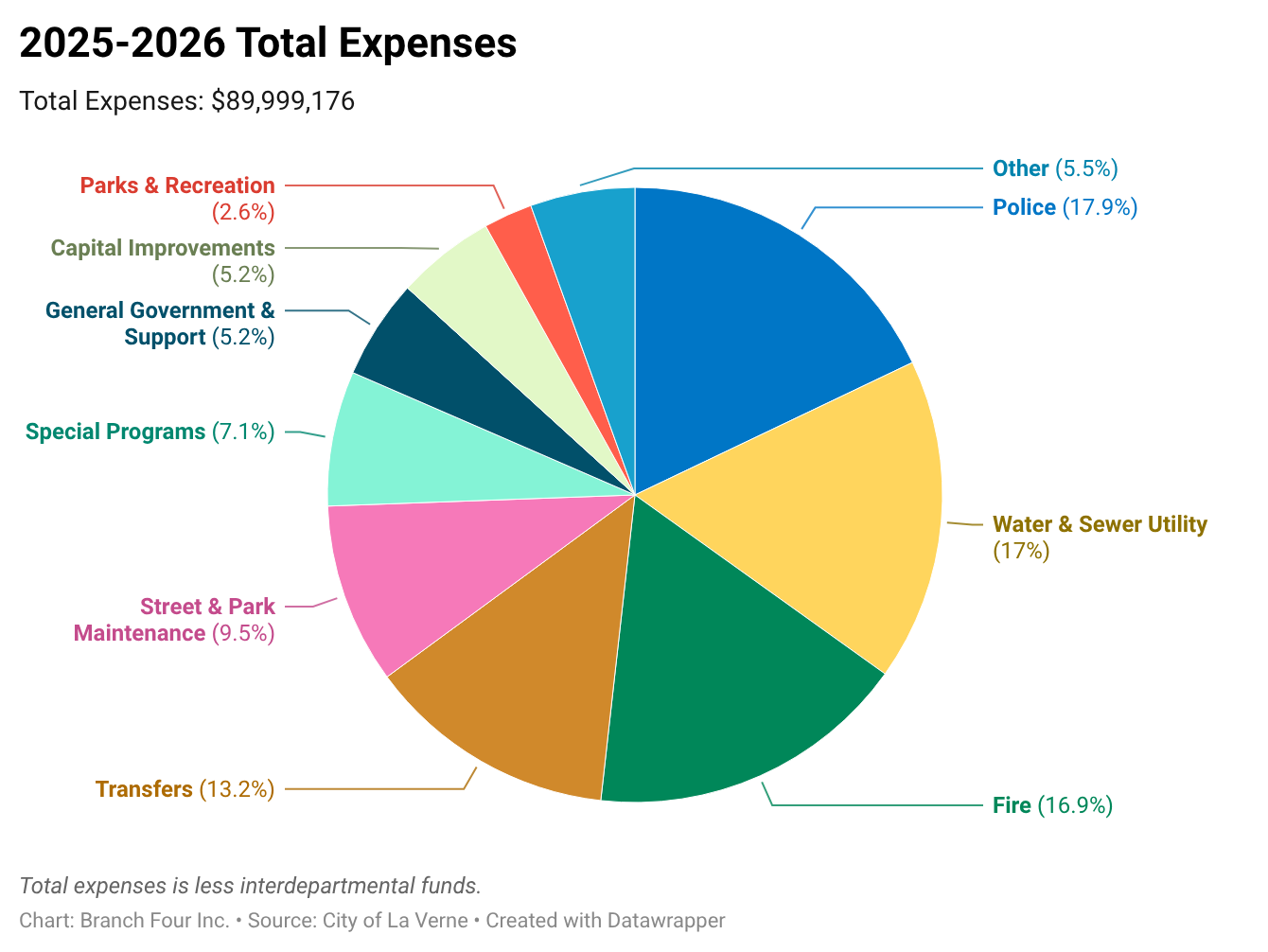
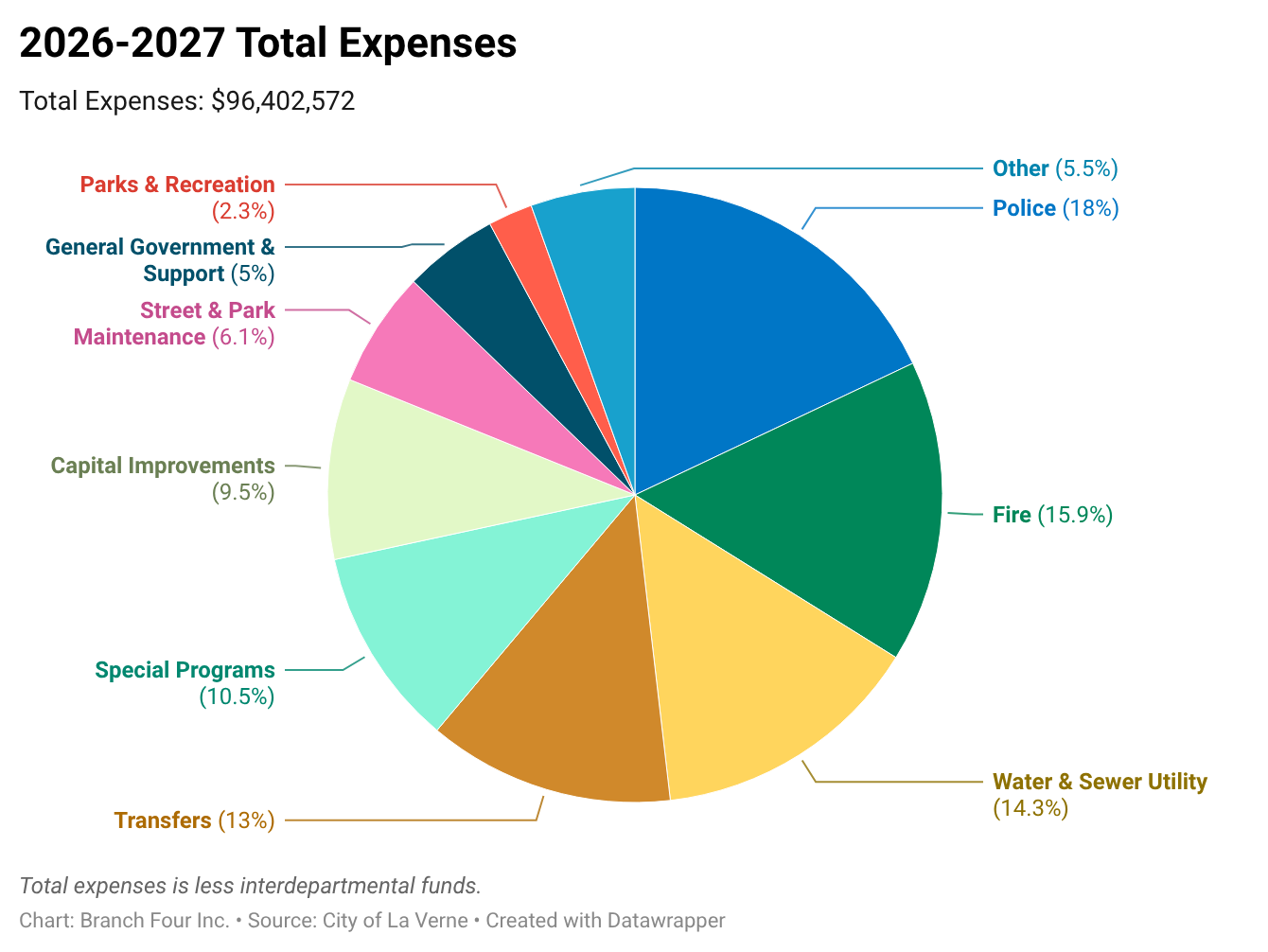
City expenses are projected to grow by about $6.4 million. More than one-third of all city spending goes toward public safety. Thanks to our news partner Branch Four Inc. for data reporting and visualization support.
Looking Ahead
If approved by the City Council on June 15, it will take effect July 1 and guide City spending and priorities through fiscal year 2026-27.
Stories like this take hours of meetings, document review and data analysis. La Verne Daily News is funded primarily by readers—not hedge funds or corporate owners.
If this kind of reporting helps you stay informed, consider donating or subscribing.
Local Events Calendar