La Verne Residents Seek Answers on Placement, Safety After Battery Fire
City and Metropolitan Water District officials addressed oversight, monitoring and cleanup at a special City Council meeting.
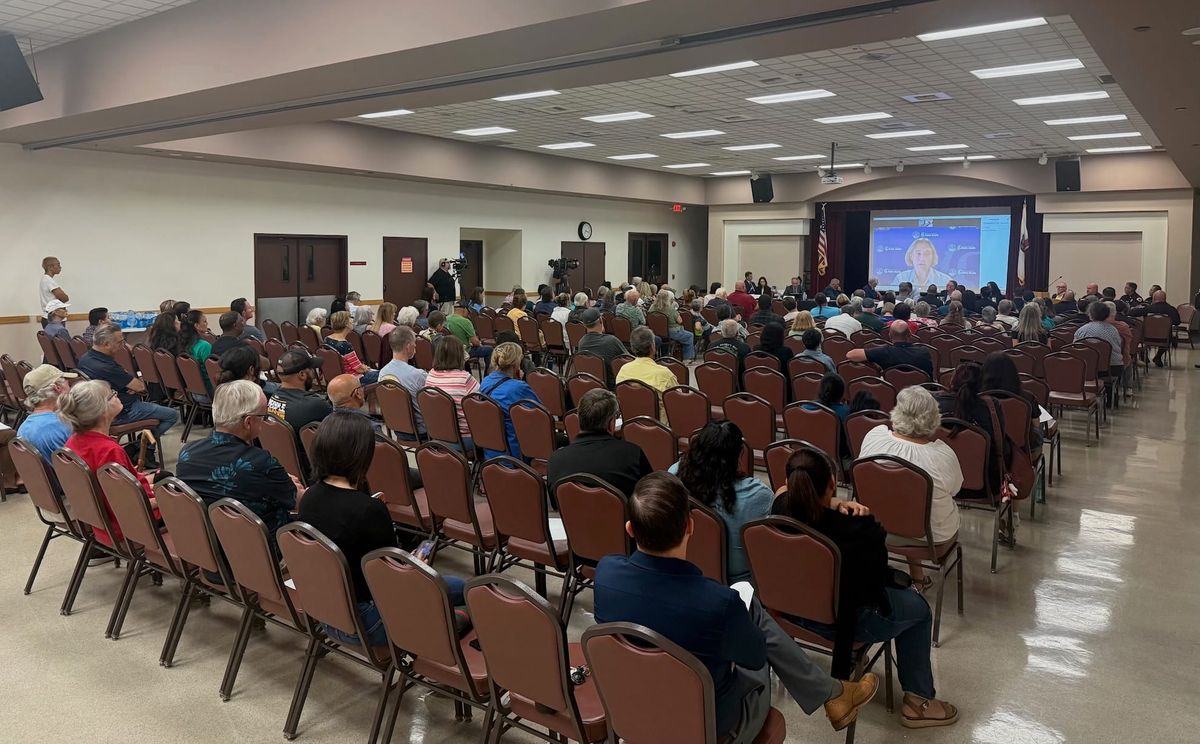
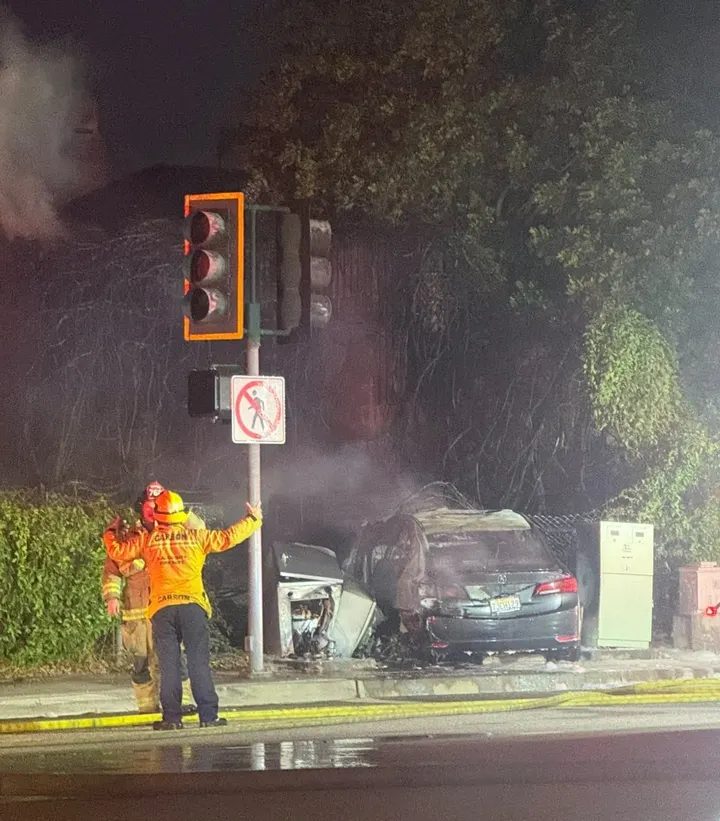
A Sept. 29 special City Council meeting addressed questions about oversight, battery placement and environmental safety following the Sept. 22 Metropolitan Weymouth Water Treatment Plant battery fire, which prompted evacuations in nearby neighborhoods.
La Verne had never approved the battery installation, and city officials say they never had the authority to. City Manager Ken Domer said Metropolitan operates as a separate governmental district. “They are exempt from our planning procedures,” he said.
About 90 residents attended the meeting, by a La Verne Daily News estimate, along with City staff, La Verne firefighters, police, and Metropolitan representatives. Dr. Nichole Quick, deputy director of the Health Protection Bureau for the Los Angeles County Department of Public Health, also joined via Zoom.
Residents Question Battery Placement
Residents questioned the batteries' proximity to homes and to one another.
Resident Rudy Diaz asked whether the City and Metropolitan had coordinated on the installation’s proximity to residents.
“Is there any collaboration between the City of La Verne and the water district to make sure that that equipment is within safe distance of the population?” Diaz asked.
Although the project did not undergo city planning approval, La Verne Fire Chief Brandon Coatney said Metropolitan voluntarily provided a site plan in 2022 showing where the equipment would be located. The plan met applicable property-line distance requirements at the time, he said. The fire department recommended installing a fire hydrant near the equipment, and Metropolitan followed that recommendation. Coatney said that was "hugely helpful during this incident."
"There have been a few cities in California pass ordinances for greater setbacks, as mentioned in the public comments, and we will be sure to start looking and reviewing all of those for potential future consideration," Domer wrote in an email to La Verne Daily News.
Elsewhere in California, Escondido now requires a 100-foot setback for battery storage facilities, with larger buffers near schools and hospitals, according to KPBS, and Vacaville requires 500 feet from neighborhoods and hospitals, according to The Press Democrat. Orange County and Los Angeles County have adopted or proposed setbacks of 100 to 300 feet for unincorporated areas. None of those rules apply in La Verne, which sets its own zoning, or to Metropolitan, which officials said is exempt from local planning rules.
Metropolitan Assistant General Manager John Bednarski said the agency was reconsidering the spacing between units.
“Do they need to be that close together? Would it make sense if they're ever rebuilt? Would they be better logistically spaced farther apart so that one could not engage the other unit? So those will be things that we look at going forward,” Bednarski said.
Bednarski said Metropolitan conducts environmental reviews for its projects but would need to confirm the specific environmental-review determination for this installation. He did not provide that information at the meeting.
Concerns About Returning Home
Resident Carolina Siegler Henderson described witnessing the explosion from her home.
“I witnessed it. I was home. I was cooking. I had all my sliders open, all my windows open,” Siegler Henderson said. She lives off Ancona Drive, on the north side of the Weymouth facility directly in front of the wall that separates the facility from the residential neighborhood.
Siegler Henderson said her household evacuated within 15 minutes. With her windows open when the incident began, she questioned whether contaminants had entered her home and whether it was safe to return.
“I wanted a resource to help me know that my home was safe to re-enter,” Siegler Henderson said.
She said she had been cleaning and washing belongings but remained uncertain about conditions inside.
Dr. Quick said smoke from any fire can be harmful and that residents whose homes may have been exposed to the initial smoke should take precautions.
She pointed residents to the department's wildfire health and safety resources, which explain how to wash down outdoor furniture and children's play equipment and how to clean smoke odors from walls, hard surfaces and soft surfaces indoors. For persistent odors or specific concerns about a home, Quick said "getting an expert into your property" is the best option. Quick did not say whether the county would test inside homes. Residents who choose to have their homes inspected or cleaned may be eligible for reimbursement from Metropolitan. For questions regarding claims, residents should email Metropolitan at rmanagement@mwdh2o.com or call (213) 217-7715.
The City of La Verne’s incident webpage explains that air-monitoring results described as “non-detect” mean substances were not detected above the equipment’s detection thresholds. According to the City, particulate matter and heavy-metal results showed no meaningful difference from typical background conditions. The webpage does not address conditions inside homes.
"If this is the disaster God wants us to handle, we will take it. It could have been far worse. We just want our home to be a healthy place," Siegler Henderson said in a message to La Verne Daily News.
Officials Explain Inspections and Alarms
Shane Chapman, Metropolitan assistant general manager of water systems operations said the solar fields preceded the batteries and described the installation as the agency’s first set of batteries put into service.
Bednarski said Metropolitan inspected the installation during construction and tested the units before accepting them from the contractor in June.
“The facility was continuously inspected by Metropolitan construction management team as it was being installed by the contractor,” Bednarski said.
The units remained under warranty when the fire occurred, he said.
Mayor Tim Hepburn asked how the battery cabinets were monitored, including whether monitoring was remote or involved temperature readings at the units.
Chapman said a contracted vendor monitors the units and reports alarms to Metropolitan’s control center. He did not say what the alarms monitor.
“So they called in the alarms at the same time that one of our employees who was working at our solids handling facility reported seeing smoke at the unit,” Chapman said.
Batteries Removed; Investigation Continues
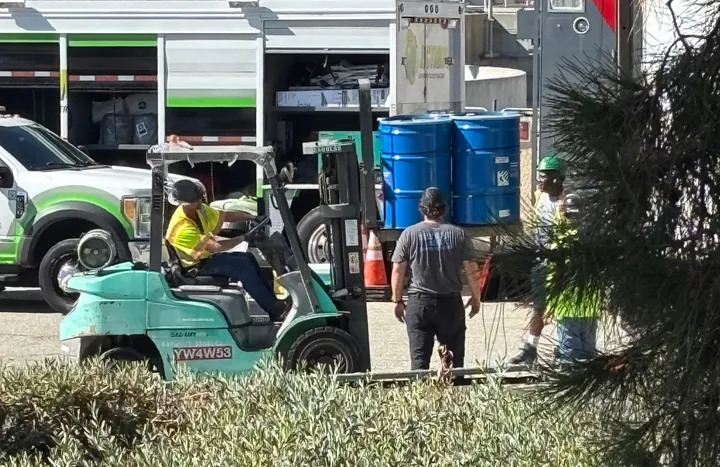
A Metropolitan spokesperson confirmed Wednesday, Sept. 30, that "all of the compromised battery cells have been removed" from the Weymouth Water Treatment Plant in La Verne and are being taken out of state.
The two unaffected units remain out of service, isolated, reduced to a low energy level and monitored. Metropolitan will decide on future use after the investigations are complete and related matters are resolved.
The cause remains under investigation. According to the City’s webpage, results are expected to take several months because the investigation includes modeling and reconstruction of the incident.
A recording of the meeting and PowerPoint slides are available online.
La Verne Daily News reached out to Metropolitan for additional information but did not hear back in time for publication. I will continue following this story, and will publish more information as it becomes available.
Local Events Calendar