La Verne Adopts $101.6 Million Budget, Eliminates Shortfall Without Cutting Community Programs
City leaders closed a projected budget gap through savings and funding shifts, but staff say long-term financial challenges remain.
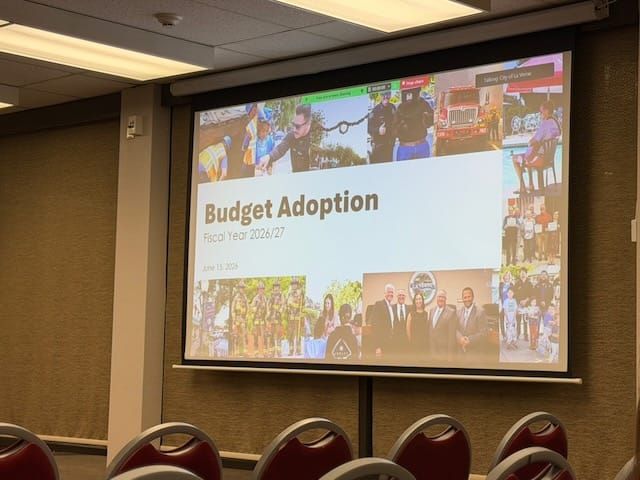
La Verne City Council unanimously adopted the City's fiscal year 2026-27 budget on June 15, approving a spending plan designed to preserve core services while addressing rising costs and long-term financial pressures.
The council voted 4-0 to adopt the budget and a resolution appropriating $101,567,087 across all City funds. Mayor Pro Tem Meshal "Kash" Kashifalghita was absent.
Community programs were preserved. Summer concerts, movies in the park and other community events survived this year's budget process despite discussions about potential reductions.
Public safety remains a priority. The budget continues funding La Verne's in-house police and fire services, which council members have repeatedly said are among residents' top priorities.
The City balanced the budget without major service cuts. Staff found savings through operational changes, funding shifts and expense reductions rather than eliminating programs.
Personnel costs are growing faster than revenue. This is the bigger long-term issue. Employee salaries, benefits and pensions now account for about 72% of General Fund spending, and those costs continue to rise.
Measure LV revenue is nearing its limits. Staff warned that the voter-approved sales tax that has helped stabilize city finances is largely committed, and its reserves could be exhausted by 2035.
Future budget decisions may become more difficult. While this year's budget was balanced, City leaders acknowledged that expenses are increasing faster than revenues. Residents could eventually face conversations about service reductions, new fees, economic development, tax measures or other revenue sources.
The adopted budget reflects a growing gap between revenues and expenses. City officials project revenues will increase by about $3.3 million in the coming fiscal year, while expenditures are expected to rise by nearly $6.4 million. According to City staff, increasing personnel and pension costs continue to outpace revenue growth, creating ongoing pressure on the City's finances.
Personnel costs, including benefits, account for approximately 72% of General Fund expenditures and are projected to increase by about $1.8 million compared with the current fiscal year.
The City projects a reserve level of 31.2% for fiscal year 2026-27, slightly above the roughly 30% reserve target discussed by council members during budget deliberations.
To help close the remaining budget gap, City staff shifted approximately $150,000 in transit-related public safety expenses from the General Fund to Proposition C transportation funding. City Manager Ken Domer said the funding supports new transit-related public safety efforts associated with the recently opened Metro A Line station, including a Transit Liaison Program and Transit Response Program.
Additional savings were achieved through reductions in travel, training, supplies, contract services and janitorial services at Veterans Hall.
The City also approved staffing changes that bring the total number of authorized full-time positions to 197, an increase of two positions from the current fiscal year. Public Works eliminated two positions, while Administration added one position and Finance added three positions.
The General Fund budget totals approximately $49 million. While slightly lower than the current fiscal year, much of the decrease is tied to a planned change that transfers solid waste billing responsibilities from the city to Waste Management beginning Sept. 1.
During budget discussions earlier this month, council members emphasized preserving community programs despite financial challenges. Council Member Wendy Lau encouraged finding efficiencies, partnerships and sponsorships rather than eliminating services, while Council Member Rick Crosby stressed maintaining reserves and retaining community programs whenever possible.
City staff said the final budget package eliminates the projected shortfall while preserving core city services. However, staff cautioned that personnel costs must be managed more closely in future years and warned that Measure LV sales tax revenues are largely committed, with reserves projected to be depleted by 2035.
Local Events Calendar