La Verne Approves $628,000 for Arrow Highway Bikeway and Road Improvements
Construction is tentatively set for early 2027, bringing a protected bike route into Pomona and changing how eastbound drivers approach White Avenue.
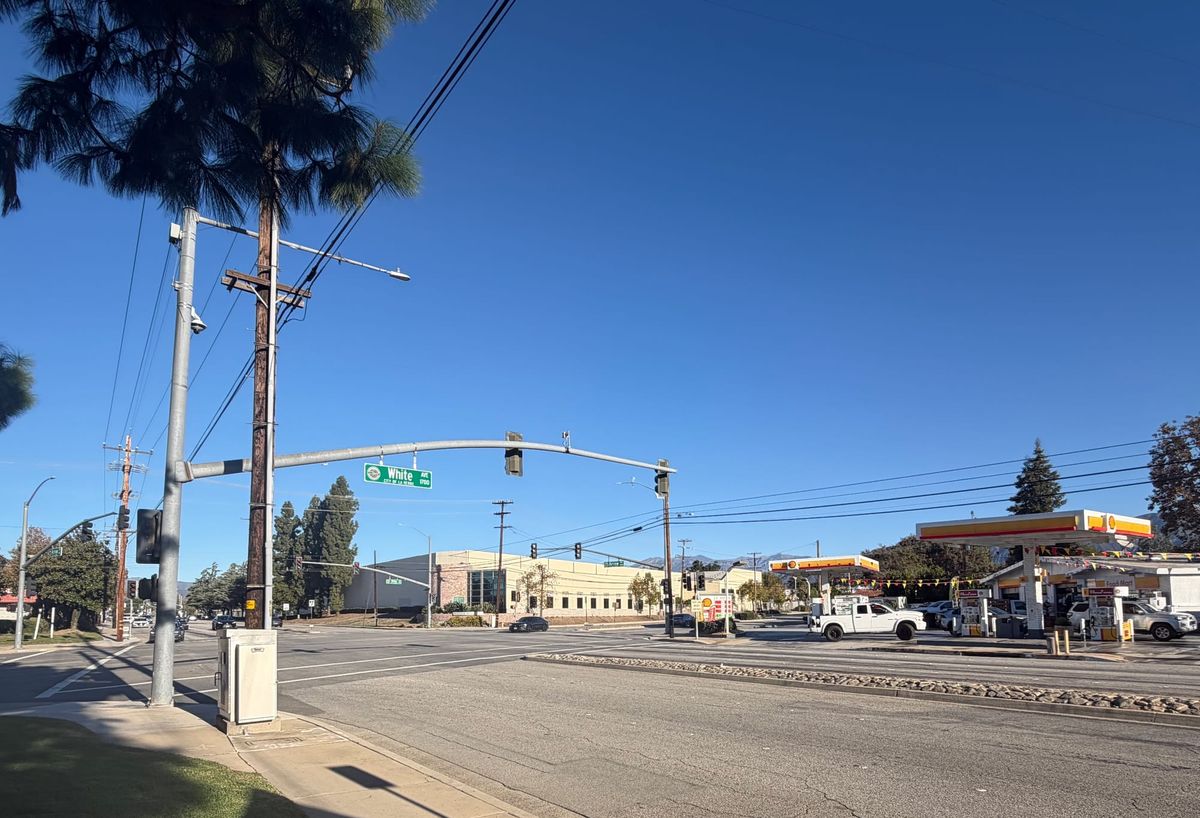
Arrow Highway’s eastbound merge near Lordsburg Court will soon give way to a separated, two-way bikeway under a regional project moving forward with La Verne’s financial commitment.
The City Council approved an agreement Nov. 2 committing a base contribution of $628,000 toward pavement rehabilitation and traffic signal improvements. For residents, the project means repaving part of Arrow Highway and creating a protected place to ride, while changing the eastbound lane configuration at White Avenue—an intersection where residents have raised concerns about congestion and neighborhood access.
The agreement is with the San Gabriel Valley Council of Governments, which is coordinating the East San Gabriel Valley Sustainable Multimodal Improvements Project with Pomona.
Where the bikeway will go
The planned route follows the south side of Arrow Highway from White Avenue east into Pomona to Cambridge Avenue/Mountain Avenue. About 900 feet of the approximately 11,700-foot bikeway would be in La Verne. The broader project also includes pedestrian improvements along Garey and Bonita avenues in Pomona.
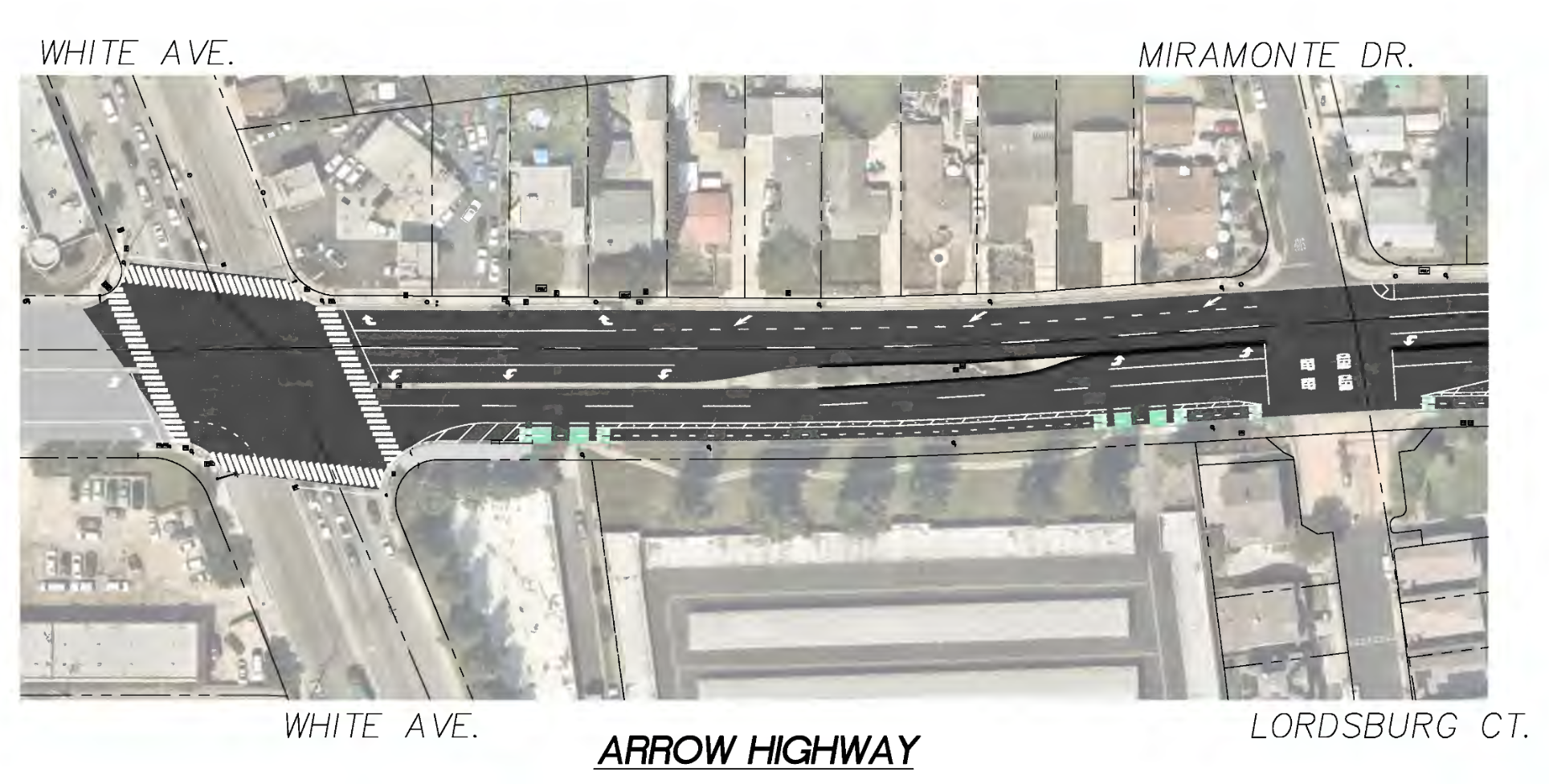
Riders traveling in both directions will share a bikeway physically separated from vehicle traffic. Known as a Class IV bikeway, this design uses features such as curbs or posts to provide separation beyond a painted line.
The regional effort is intended to improve bicycle and pedestrian connections to transit and the Fairplex. When the council reviewed an earlier design in January, residents and council members questioned traffic backups, emergency access and how people would enter and leave neighborhoods along Arrow Highway.
What will change for drivers
The project will remove the third eastbound travel lane between White Avenue and Lordsburg Court. Today, eastbound traffic merges from three lanes to two east of Lordsburg Court. Under the new configuration, the outside eastbound lane approaching White Avenue would become a right-turn-only lane, leaving two lanes continuing through the intersection.
According to the Nov. 2 staff report, westbound travel lanes, parking and right-turn lanes would remain generally similar to the existing arrangement. The White Avenue signal would receive video vehicle detection in place of sensors embedded in the pavement.
What the traffic analysis found
A March 12 engineering analysis by HR Green projected that White Avenue and Arrow Highway would continue operating at an acceptable level with the lane change. Using estimated 2026 traffic, the intersection received the same operating grades with or without the project: B during the morning peak and D during the evening peak. (See page 130 in the La Verne City Council April 6 Meeting Packet)
The analysis used 2022 traffic counts increased by 2% annually to estimate 2026 conditions. It did not collect traffic counts at Lordsburg Court, instead estimating trips using standard trip-generation rates.
Engineers concluded that removing the third lane was not expected to significantly affect access to the Lordsburg community. They recommended pavement markings to make bicycle crossings more visible.
Construction and costs
Construction is tentatively scheduled to begin in early 2027. Pomona’s April project update anticipated completion by the end of 2027; that remains a projected completion window rather than a confirmed opening date.
La Verne’s base contribution includes $528,000 for pavement rehabilitation and $100,000 for traffic signal improvements at White Avenue. City Engineer Cody Howing said coordinating the work with the regional bikeway project should save the City an estimated $247,000 compared with completing the pavement work separately.
La Verne would maintain the improvements within its boundaries after construction. The agreement also assigns the City responsibility for additional costs tied to its portion of the project.
Public Works Director Danny Wu said in an email to La Verne Daily News that the bikeway’s annual maintenance cost, is “anticipated to be minimal."
The news is free. Reporting it isn't. If you value local news you won't find anywhere else, please consider supporting my work.