A Lullaby Unlocks a La Verne Childhood Nearly Forgotten
+ Events in and around La Verne Sept. 10-20

Happy Thursday, Neighbors!
So, I leave town for a journalism conference, and La Verne (and parts of Pomona) experience a major power outage! Thank goodness for phones and the internet. I was able to contact officials at Southern California Edison and share updates via La Verne Daily News' Instagram and Facebook. You can read the latest information in this story.
Thank you, as always, for your support!
Staci
Feature Story: A Lullaby Unlocks a La Verne Childhood Nearly Forgotten
Riverside resident Pat Schulte recently revisited the David & Margaret Home, where she and her siblings lived more than eight decades ago.
The opening notes of Brahms’ “Lullaby” unlocked a memory Pat Schulte did not know she still carried.
Schulte was 55 and working with young children in the Riverside Unified School District’s teen parent program when staff played the familiar melody at naptime. Suddenly, she was 4 years old again, lying down for a nap at the former David & Margaret Home in La Verne.
“It was like a bolt of lightning hit me,” Schulte said. “I’m like, ‘Oh my God, that’s what they played at the orphanage when we had to take a nap.’”
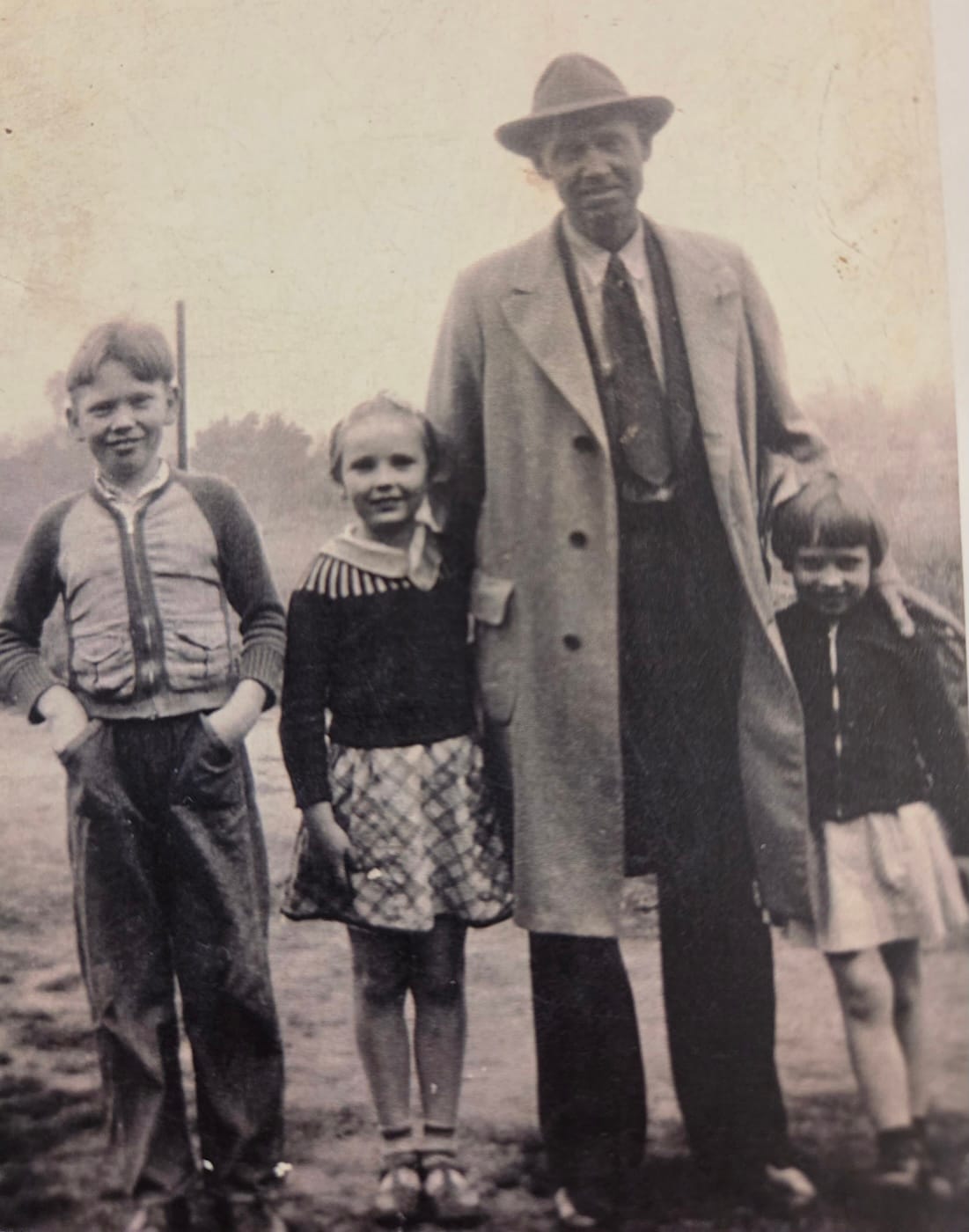
Now 90, the Riverside resident remembers little else firsthand about the year she spent at the children’s home more than eight decades ago. She has pieced together parts of the experience through photographs, institutional records and conversations with her older sister, Marilyn.
“After you have so much water under your bridge, it all washes away,” Schulte said.
The siblings arrived at the home in June 1940 and left in July 1941, according to records Schulte obtained from the organization. At the time, the facility was commonly described as an orphanage. Today, the nonprofit known as David & Margaret Youth and Family Services provides housing, mental health care and other programs for children, young adults and families.
The property’s history as a children’s home dates to the late 19th century. According to information on the David & Margaret website, First Bank President Henry Kuns began building the La Verne Hotel in 1892 and later donated it to the Women’s Home Missionary Society of the Methodist Church for use as the area’s first orphanage.
After the hotel fell into disrepair, Kuns donated land and money for a safer facility. Completed in 1925, the new structure is now known as the Whitney Building. Schulte and her siblings lived there from 1940 to 1941. Beginning in 1964, young residents moved out of the Whitney Building and into residential cottages constructed on the property.
Schulte was born in August 1935 and grew up in Brawley, near the U.S.-Mexico border. Her mother died in November 1939, leaving Schulte’s father to care for three young children. He was a carpenter and had to continue working.
Schulte’s older brother and sister initially went to live with relatives, while Schulte remained in Brawley with her father and stayed with his friends. The three children were later reunited and placed at David & Margaret.
Schulte does not know exactly why the family chose the La Verne home or whether her father had lost custody. She suspects its location may have played a role because he had moved to Riverside for work.
“He was 49 when I was born,” Schulte said.
By the time he became a widower, he was in his early 50s with children ages 3, 5 and 9. Other relatives were unable to take all three children, she said.
Years later, records showing that two of her aunts had signed the siblings into the home left Schulte angry.
“I don’t lose my temper very often, but I was furious,” she said.
A conversation with her older half-sister helped Schulte understand the circumstances differently. One aunt was already raising three grandchildren, and another ran a hotel that wasn't considered an appropriate place for young children.
Schulte also came to see the decision within the economic and historical circumstances surrounding her family.
“It was the war,” she said. “You’re in the middle of World War II. That was a whole different era. Financially, I can understand it.”
Holding on to resentment, she decided, would not change what happened.
“You can spend your whole life holding on to grudges,” Schulte said. “We were poor, and I don’t remember ever feeling poor.”
Still, the documents could not tell Schulte what daily life felt like for the 3-year-old who entered the home or the 4-year-old who left it.
She remembers being placed in the nursery, apart from her older siblings. As a young child, she struggled to pronounce their names: Her brother Bill became “Butter,” and Marilyn became “Minnie.”
Marilyn has more memories of the home. She told Schulte she tried to visit her younger sister but was not allowed because the older girls and younger children lived separately. Boys and girls also remained apart, even on the playground.
According to Marilyn’s recollections, the girls ate at long communal tables. If they played with their feet under the table, they had to stand and kick a wall.
The children did not have individual wardrobes. Clothing went into a shared closet, and each morning they selected whatever fit. Marilyn remembered a relative sending her a fancy pink dress, but she never saw it again.
Marilyn also recalled riding a bus to church and seeing their father, older half-sister, and an uncle when they came to visit. Schulte has photographs from at least one of her father’s visits, including an image of the three siblings together.
“This is when my father came to the orphanage to visit us,” Schulte said as she shared the photograph.
➡️ Read the full story
Business Buzz 🐝
La Verne’s dining scene is serving up two fresh updates.