La Verne Battery Fire FAQ: Your Questions About Evacuations, Air and Water Answered
We've compiled answers to common questions about the evacuation zone, air monitoring, drinking water, school closures, and ongoing emergency response.
This page will be updated as more information becomes available.
Updated 1:04 p.m. Sept. 25
Fire personnel and lithium-ion battery experts worked overnight Thursday into Friday to remove battery modules safely from the affected enclosure. The City said that work eliminated the potential hazard to the surrounding community, allowing officials to lift all evacuation orders, warnings and advisories at 6 a.m. Friday.
Residents may return home, and businesses may reopen. The cause of the initial explosion and fire remains under investigation.
City Council will hold a meeting at 6 p.m. Sept. 29 at the Community Center, 3680 D. St., to discuss the recent battery fire at Metropolitan Water District's F. E. Weymouth Water Treatment Plant. This meeting is open to the public, and community members will have a chance to speak.
Is the emergency response over?
No. Although officials lifted the evacuation and said the danger to the surrounding community had been eliminated, fire and hazardous-materials personnel continued monitoring the battery modules Friday.
Air monitoring will continue until the materials are removed from the plant. Metropolitan estimated that process would take three to five days.
Who will investigate the fire?
Metropolitan expects to lead the investigation with assistance from technical experts, contractors involved in designing and building the system, and local officials as needed.
The investigation will begin after the battery materials are removed from the site. Officials have not determined what caused the initial explosion and fire.
Why did the City declare a local emergency?
City Manager Ken Domer declared a local emergency to support the City’s continued response to the incident. The City Council will consider ratifying the declaration during a special meeting at 6 p.m. Tuesday, Sept. 29, at the La Verne Community Center, 3680 D St. The meeting is open to the public.
Can residents and businesses file a claim for fire-related expenses or losses
Residents and businesses affected by the fire at the F.E. Weymouth Water Treatment Plant may submit claims to the Metropolitan Water District of Southern California, according to the City of La Verne’s website.
Claimants should complete Metropolitan’s claim form and follow the submission instructions included with it. Questions may be directed to rmanagement@mwdh2o.com or (213) 217-7715.
Will Bonita Unified students who missed school because of the fire evacuation be excused?
Students who live in zones that were identified as mandatory evacuation and warning evacuation zones and did not attend school because of the incident will receive excused absences, according to Bonita Unified School District.
Excused absences are recorded on a student’s attendance record, but students do not face the consequences associated with truancy.
The District said it does not receive state Average Daily Attendance funding when a student is absent, even when the absence is excused. However, because Grace Miller Elementary School was required to close, the District said it will apply to recover attendance funding for that campus. The Los Angeles County Office of Education will help the District submit documentation to the state explaining the closure.
Need Support After the La Verne Battery Fire? Here’s Where to Turn
Claimants should complete Metropolitan’s claim form and follow the submission instructions included with it. Questions may be directed to rmanagement@mwdh2o.com or (213) 217-7715.
Tri-City Mental Health offers free emotional support, crisis care and resource referrals for affected residents and families.
What happened? Read La Verne Daily News' Coverage


 Staci Baird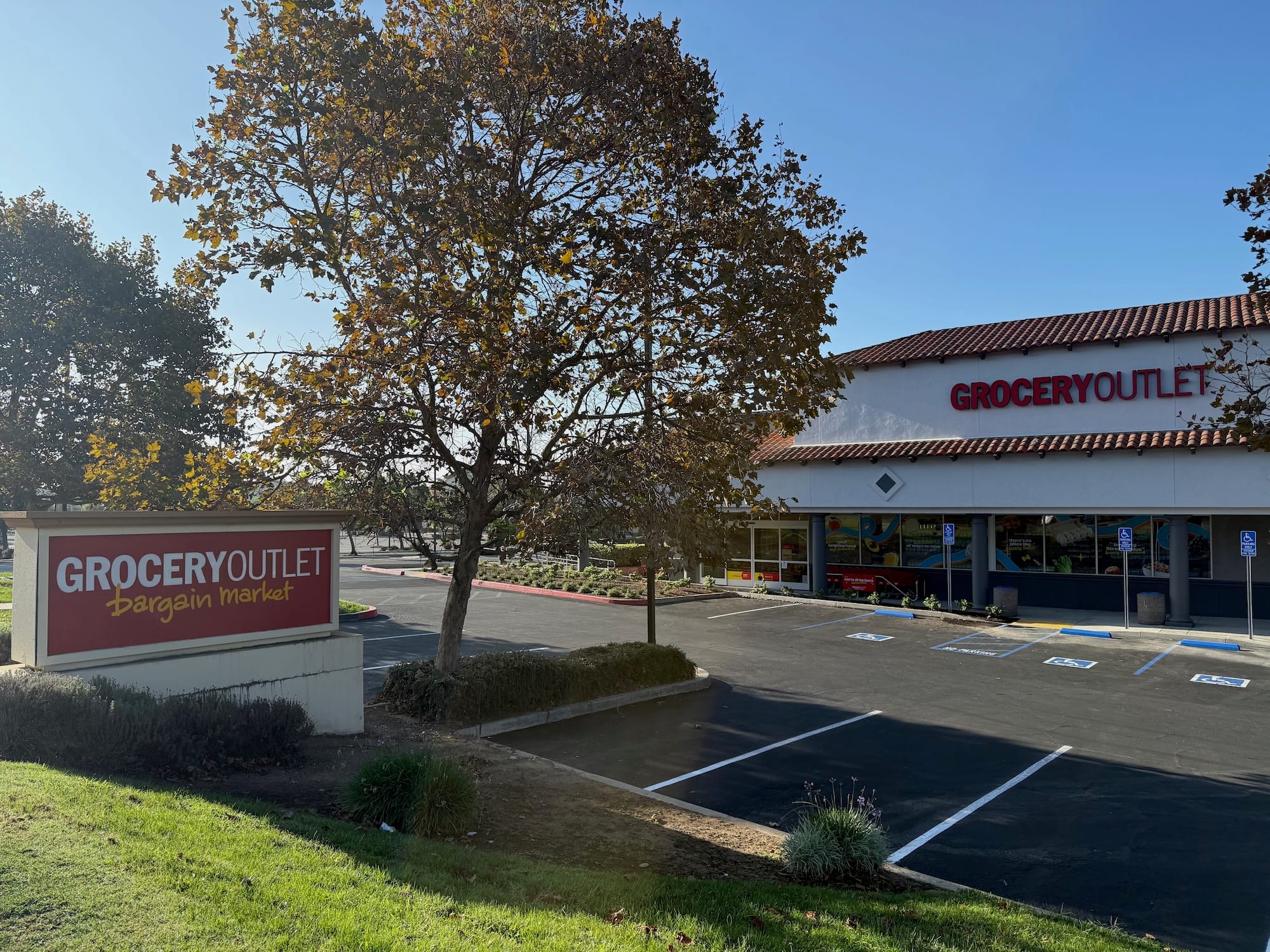
Is the fire still burning?
No active fire or smoke was reported Friday morning. Fire officials said both affected battery banks had been deemed safe.
Specialists removed modules from Battery Bank Two’s enclosure and spread them across a designated area so crews could monitor them individually for heat or other activity. Crews also isolated a problem area in Battery Bank One.
Fire and hazardous-materials personnel will continue monitoring the materials until they are packaged and removed from the plant.
Can residents return home?
Yes. All evacuation orders, warnings and advisories were lifted at 6 a.m. Friday. Residents may return home.
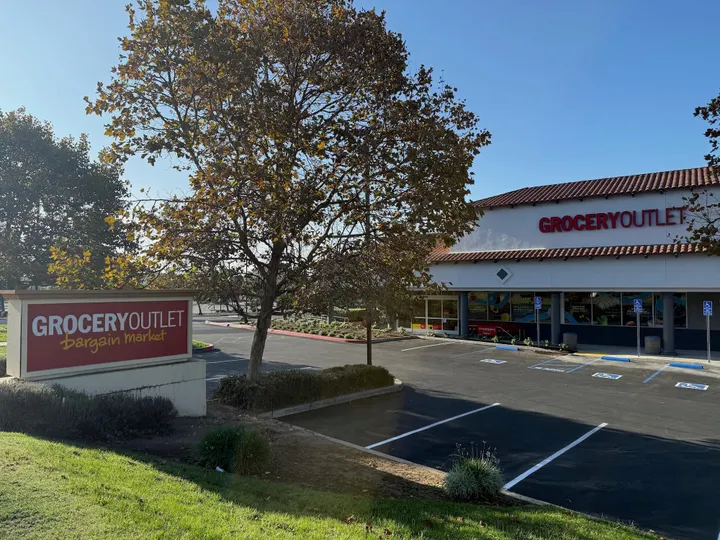
Businesses within the former evacuation zone may also reopen. Businesses at The Commons at La Verne began reopening Friday, including Grocery Outlet, which planned a soft opening at noon after its Thursday grand opening was postponed.
Why was the evacuation order lifted?
Fire personnel and lithium-ion battery experts worked overnight to remove battery modules from the affected enclosure. The City said that work eliminated the potential hazard to the surrounding community, allowing all evacuation orders, warnings and advisories to be lifted Friday morning.
What area was under evacuation?
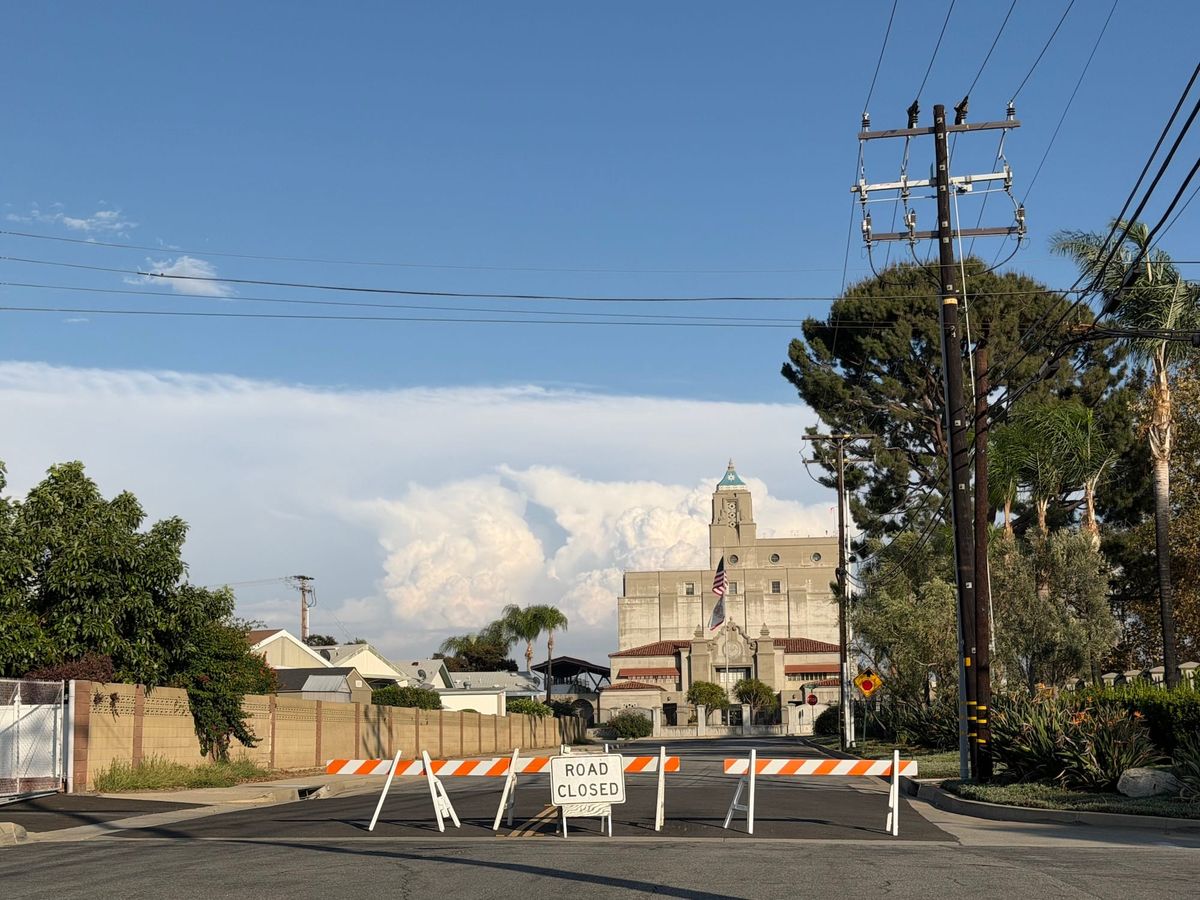
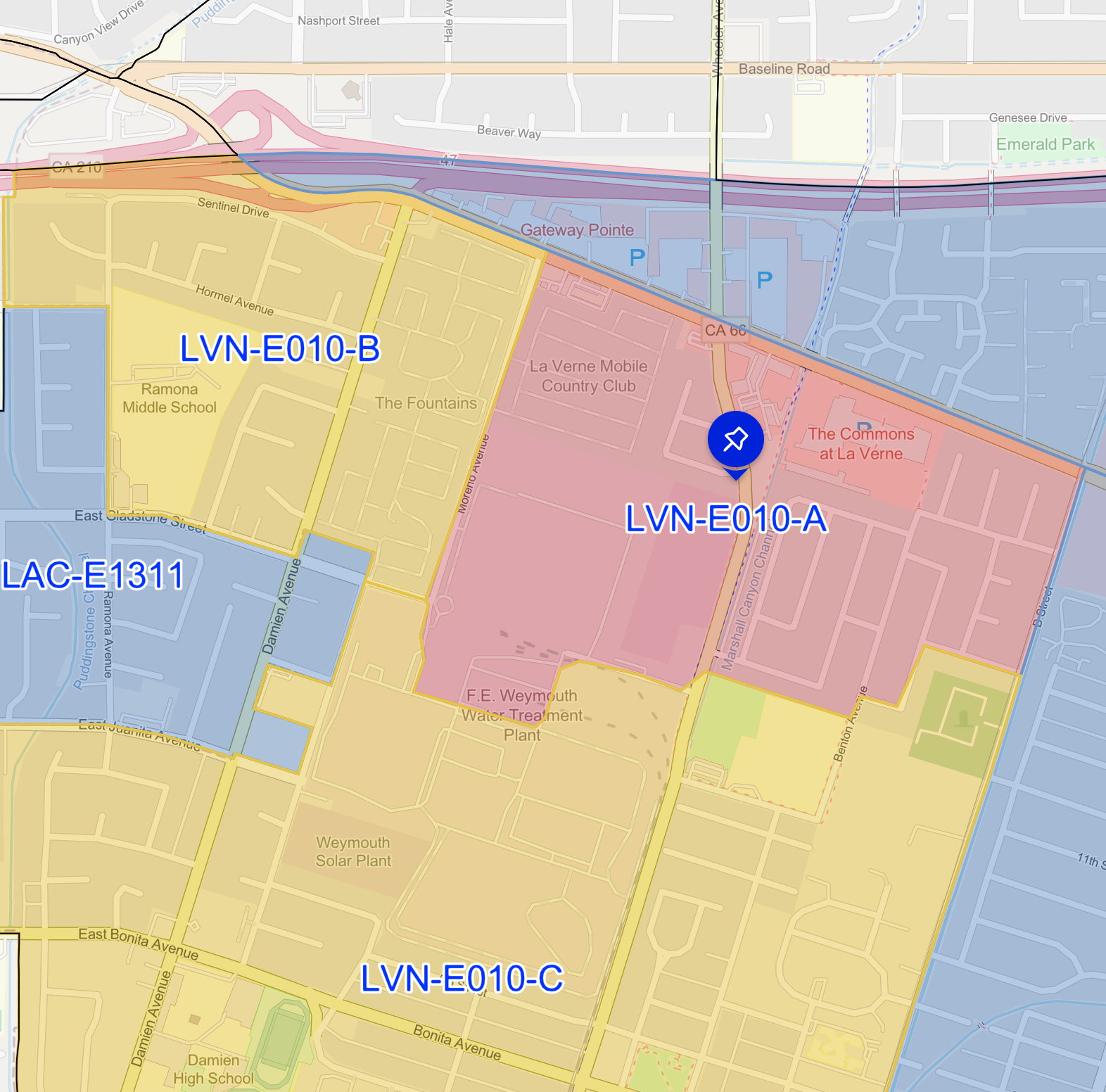
No part of La Verne is currently under an evacuation order, warning or advisory related to the battery fire. All evacuation notices were lifted at 6 a.m. Friday, Sept. 25.
Residents should continue monitoring Genasys Protect for immediate emergency updates.
Where did the fire occur?
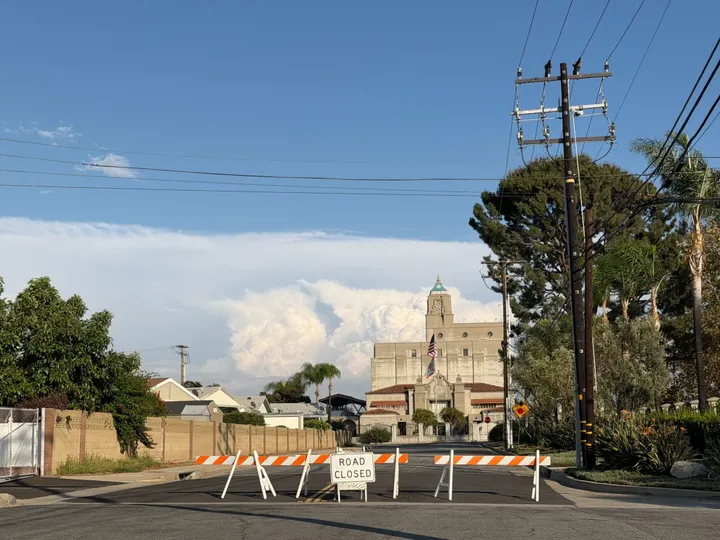
The incident occurred at the F.E. Weymouth Water Treatment Plant near Wheeler and Moreno avenues in La Verne.
When will the battery materials be removed?
Metropolitan estimated Friday that removing the affected battery materials would take approximately three to five days.
The agency is waiting for specialized packaging and neutralizing materials being transported from outside California. Once those materials arrive, crews will package the batteries for transportation to a disposal facility. Fire personnel will continue monitoring them while they remain at the plant.
Why does the treatment plant have battery storage systems?
Metropolitan installed approximately 2 megawatts of solar panels at the plant about 15 years ago to reduce its electricity use. The battery systems were added to store solar-generated electricity and allow parts of the plant to reduce their reliance on the electrical grid during peak hours, generally from 4 to 9 p.m.
Metropolitan described the batteries as a “peak-shaving” system intended to reduce demand on Southern California Edison’s grid.
Did the battery systems have fire-detection and suppression equipment?
Yes. A Metropolitan spokesperson said the systems have fire-detection and fire-suppression equipment. An investigation will determine whether those systems operated effectively and what caused the incident.
Did Metropolitan and the La Verne Fire Department have an emergency response plan?
Metropolitan said it and its emergency-response partners had plans in place before the fire. The agency said it regularly communicates with the La Verne Fire Department and provides the department with background information about the facility.
Metropolitan also said it conducts emergency-preparedness exercises and activities with first responders. The most recent took place in June 2026. The agency did not provide additional details about whether that exercise specifically involved the battery systems.
How were the evacuation boundaries determined?
Fire officials used major streets to create boundaries that residents could easily understand and recognize. The mandatory evacuation area was designed to include the entire 186-unit La Verne Mobile Country Club, as well as nearby residential streets east of the Weymouth plant.
La Verne Fire Battalion Chief Mark Savage said the boundaries are not based on a fixed mathematical distance from the battery systems. They are driven by the incident, including the locations of nearby residents, conditions at the plant, and the potential direction of smoke if another fire occurs.
Officials reduced the original evacuation area as conditions changed. During the incident, residents were advised to check Genasys Protect for their address rather than relying solely on their distance from the plant.
Why can someone across the street be outside the mandatory evacuation zone?
Emergency boundaries must follow identifiable streets and other landmarks so residents and responders can clearly understand them. That means homes close to one another may receive different instructions. Officials said they drew the boundary to remove those considered most at risk, and it may change if conditions warrant.
Residents outside the mandatory zone were advised to monitor Genasys Protect because some were within an evacuation-warning area. All evacuation orders, warnings and advisories were lifted Friday morning.
What is the difference between an evacuation order and an evacuation warning?
Residents in the red evacuation-order zone are required to leave because fire officials believe they need to be removed from potential danger. People in a yellow evacuation-warning area are not required to leave, but they may if they believe it is safest for them. Officials said they would support residents who voluntarily leave a warning area.
No evacuation orders or warnings related to this incident remain in effect.
What schools are currently closed?
Grace Miller Elementary School remained closed Friday, Sept. 25, although the evacuation had been lifted. Families should follow Bonita Unified School District’s ParentSquare messages for information about when the campus will reopen.
Other Bonita Unified schools remained open.
Bright Beginnings Preschool will be open normal hours on Monday.
Damien High School and Calvary Baptist Schools remained open during the incident.
Why was Grace Miller Elementary closed?
Grace Miller Elementary was closed as a precaution because of its proximity to the evacuation area and the difficulty of quickly evacuating hundreds of students if conditions suddenly worsened. Officials were concerned that the batteries could flare up or that changing winds could carry smoke toward the campus while students were at school or traveling there.
What about Hillcrest residents?
Hillcrest returned to normal operations after air monitoring detected no contaminants associated with the fire. All evacuation warnings and advisories related to the incident were lifted Friday morning.
Is the air safe?
Los Angeles County Fire Health Hazmat said monitoring began within the first hour of the incident and consistently found no detectable hazardous substances along the property’s perimeter. Monitoring will continue until the battery materials are removed from the site.
What if I smell something?
Report bad smells, smoke, or dust to the South Coast Air Quality Management District's Online Complaint System or by calling 1-800-288-7664.
Is the drinking water safe?
Metropolitan officials said the treatment plant continues operating and the community’s drinking water supply has not been affected.
Why is water runoff being tested?
Officials collected and tested runoff produced by the water used to cool the battery systems. The runoff entered local drainage areas and was monitored by Los Angeles County Fire Health Hazmat.
No additional firefighting runoff was being generated Friday because crews were no longer applying cooling water. Metropolitan expected laboratory results Friday afternoon and said it would release them after reviewing the data.
The runoff testing is separate from drinking-water testing. Metropolitan said the plant’s water-treatment operations continued without interruption and the drinking water remained safe.
Were there any injuries?
One Metropolitan employee was injured after tripping and falling while leaving the area Tuesday. The employee was taken to a hospital in good condition. No firefighters were injured.
Could the battery systems explode?
Officials said individual battery cells may experience small explosions during thermal runaway. However, they said those events are not expected to pose an explosion risk to the surrounding community.
How large is the battery system, and when was it installed?
Metropolitan’s La Verne complex has four separate 250-kilowatt lithium-ion battery systems with a combined rated power of 1 megawatt. The two systems on the north side were affected by the incident and rendered inoperable. The two systems on the south side were unaffected and were taken offline and de-energized Friday.
The system was commissioned in mid-2026 and remains under warranty. Metropolitan has not provided its energy-storage capacity in megawatt-hours or identified the specific lithium-ion chemistry.
What is happening to the two unaffected battery systems?
Metropolitan is taking the two unaffected systems on the south side of the plant offline and de-energizing them. The systems will not be charged or operated while the agency investigates the fire and evaluates their future use.
Will Metropolitan rebuild or continue using the battery systems?
Metropolitan is taking the two unaffected battery systems offline and de-energizing them. The agency said none of the four systems will be charged or operating for the foreseeable future.
Metropolitan will investigate the cause before deciding whether any of the systems should return to service. An agency official said Metropolitan would work closely with the City before considering restarting them.
How many homes were included in the evacuation response?
Law enforcement officers conducted door-to-door outreach at approximately 504 homes during the evacuation. All evacuation orders, warnings and advisories were lifted Friday morning.
Where can residents find updates?
Residents can monitor the City of La Verne website, Genasys Protect and the La Verne fire and police departments’ social media accounts.
Was this helpful, interesting, or useful?
Help me share more local information like this with our community!
Local Events Calendar