With Evacuation Over, Damaged Batteries Still Must be Removed from La Verne Water Plant
Fire crews continue monitoring the Weymouth site as Metropolitan prepares batteries for disposal, awaits runoff test results and begins investigating the cause of the fire.
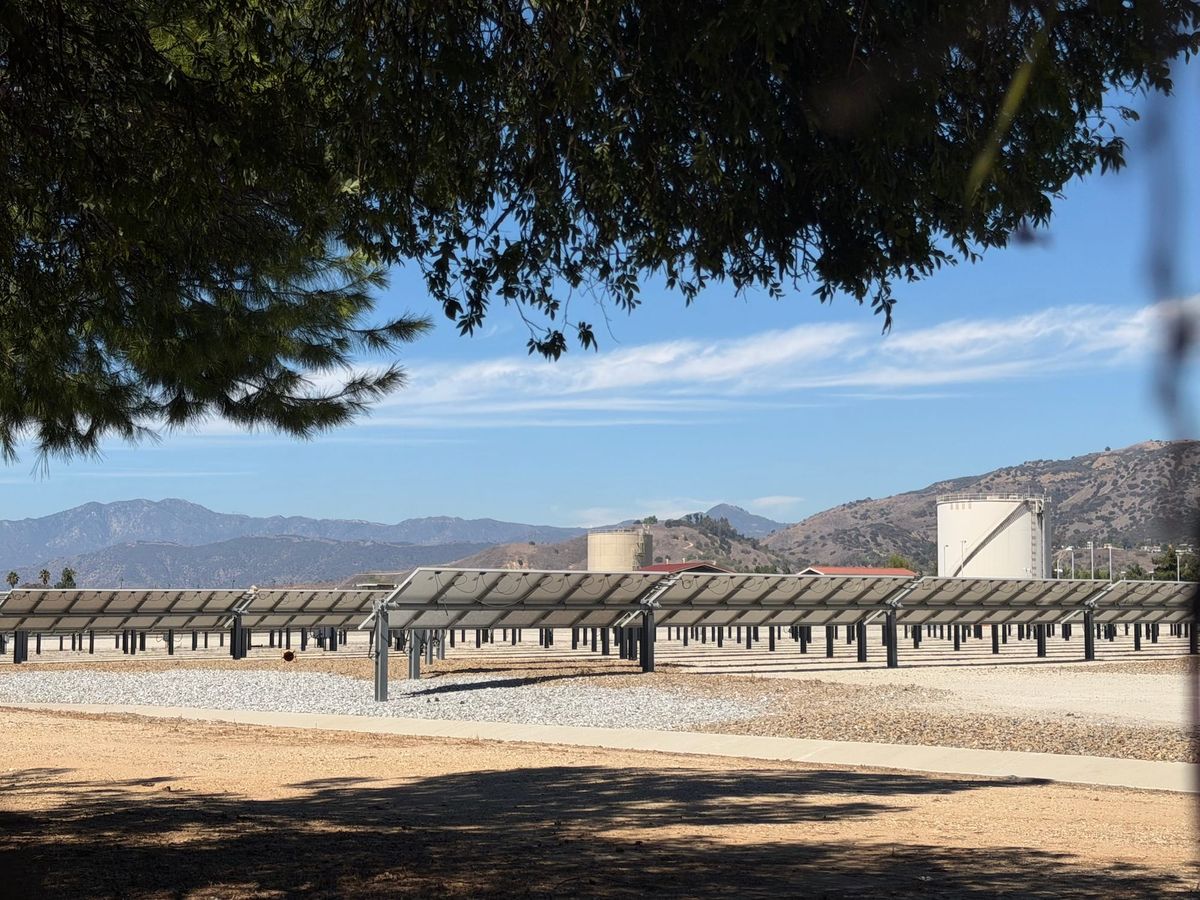
The evacuation is over, but the response to the battery fire at the F.E. Weymouth Water Treatment Plant is not.
Over the next several days, crews plan to package and remove the damaged battery materials from the site, continue monitoring the air, take two unaffected battery systems offline and prepare for an investigation into what caused the fire.
John Bednarski, Metropolitan Water District of Southern California assistant general manager of water resources and technical services said Friday that removing the affected batteries from the La Verne plant could take three to five days. Specialized packaging and neutralizing materials must be transported from outside California before the batteries can be shipped to a disposal facility.
“We would just ask for your patience over the next several days as we do our due diligence to clean the site up and get all of this material safely handled and transported away from here,” Bednarski said during a Friday morning news conference at La Verne Fire Station 1.
Fire personnel and lithium-ion battery specialists worked overnight Thursday into Friday to dismantle Battery Bank Two, which had been the primary concern during the later stages of the emergency.
Specialists disconnected the battery modules and reduced their voltage to levels that allowed firefighters to remove them from the enclosure, La Verne Fire Chief Brandon Coatney said. The modules were moved to a designated area and spread apart so crews could monitor them individually and respond if any began generating heat.
Separating the modules also reduced the possibility that heat from one could spread to the others and trigger thermal runaway, a chain reaction in which battery cells continue generating heat.
Crews then isolated a problem area in Battery Bank One, which was involved in the original explosion and fire Tuesday.
Both affected battery banks had been deemed safe by Friday morning, Coatney said. That allowed officials to lift all evacuation orders, warnings and advisories at 6 a.m., clearing residents to return home and businesses to reopen.
Although officials said the remaining materials no longer posed a danger to the surrounding community, fire personnel and hazardous-materials teams will continue monitoring them.
Metropolitan also plans to keep fire personnel watching the site and continue air-quality testing until the batteries are removed. Ernie Hernandez, with Los Angeles County Fire Health Hazmat said monitoring began within the first hour of the incident and consistently found no detectable hazardous substances along the plant’s perimeter.
La Verne police planned to maintain a presence in the area throughout Friday.
Find Answers to Frequently Asked Questions
 Staci Baird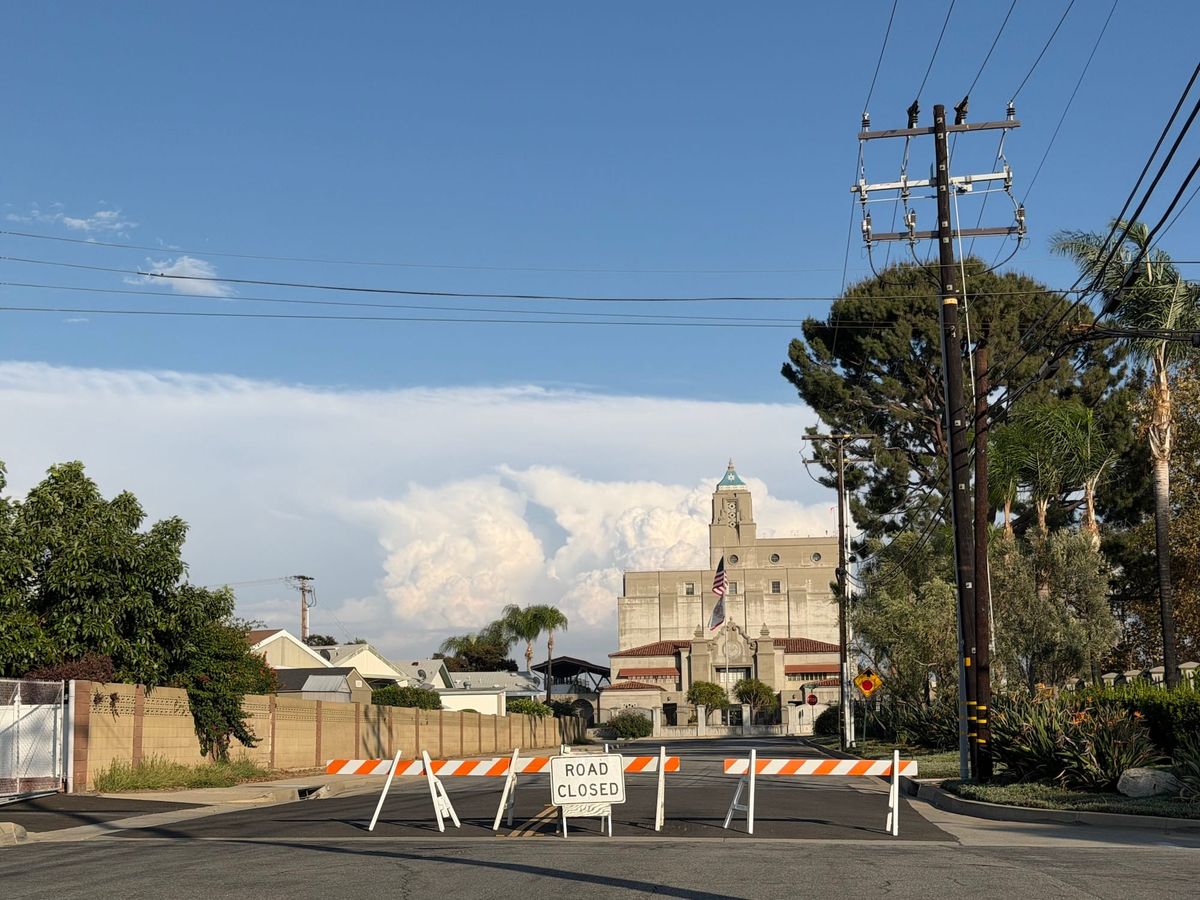
Two Unaffected Battery Systems Going Offline
The Weymouth plant has four separate 250-kilowatt lithium-ion battery systems with a combined rated power of 1 megawatt.
The two systems on the north side of the plant were affected by the incident and are no longer operational. The two systems on the south side were not affected, but Metropolitan planned to de-energize them Friday.
“For the foreseeable future, these battery packs will not be operational,” Bednarski said. “They will not be charged.”
The battery storage units went online in June 2026 and remains under warranty. Metropolitan plans to investigate the cause of the fire before deciding whether any of the battery systems should return to service.
Bednarski said the agency would work closely with the City before considering restarting them.
The batteries were installed to store electricity from the plant’s solar panels and reduce its reliance on Southern California Edison’s grid during peak-demand hours, generally from 4 to 9 p.m.
Another large battery storage system operates at Gilead Sciences’ La Verne facility, according to a La Verne Department Battalion Chief Robert Russell. However, he cautioned against directly comparing it with Metropolitan’s system.
The Gilead installation has a different design, enclosure, battery-management system, cell chemistry and cooling system, Russell said.
Like Metropolitan’s system, the Gilead installation is used primarily for “peak shaving”—storing electricity when demand or rates are lower and using it during peak-demand periods to reduce the facility’s reliance on the electrical grid.
Battery storage systems are commonly paired with solar arrays so electricity generated during daylight hours can be stored for use later, the official said.
Runoff Results Expected Soon
Metropolitan expected to receive laboratory results Friday afternoon from testing of runoff produced by the water used to cool the batteries. La Verne Daily News reached out to Metropolitan this morning to ask about the status of those results. This story will be updated when new information becomes available.
Fire officials said no additional firefighting runoff was being generated Friday because crews were no longer applying water. Los Angeles County Fire Health Hazmat monitored the runoff while cooling operations were underway.
The runoff testing is separate from drinking-water monitoring. Metropolitan said treatment operations continued without interruption during the emergency and that the drinking water remained safe.
A skeleton crew of volunteer operators kept the treatment plant running while access to the facility was restricted.
Residents concerned that smoke or other material may have entered their swimming pools or settled on their property should consider hiring a reputable company to conduct testing, Bednarski told La Verne Daily News after the news conference.
He directed residents to Metropolitan’s or the City’s website for information about submitting claims related to the incident. Metropolitan has said it will work with residents and businesses to identify and address their claims.
For any questions about claims, residents can email rmanagement@mwdh2o.com or call (213) 217-7715. The claim form can be downloaded here (PDF).
Investigation to Follow Removal
Metropolitan expects to lead the investigation with help from its technical specialists, contractors involved in designing and building the battery system, and local officials as needed.
The investigation will begin after crews package and remove the damaged materials from the property.
“We really do want to find out what the root cause of this situation was,” Bednarski said, adding that the agency also wants to determine how a similar incident could be prevented.
Investigators will also examine whether the systems’ fire-detection and fire-suppression equipment worked as intended.
City Manager Ken Domer declared a local emergency to support the City’s continuing response. The City Council will consider ratifying the declaration during a special meeting at 6 p.m. Tuesday, Sept. 29, at the La Verne Community Center, 3680 D St. Residents will be able to hear an update, ask questions and participate in the discussion.
Was this helpful, interesting, or useful?
Help me share more local information like this with our community.
 Staci Baird
Local Events Calendar